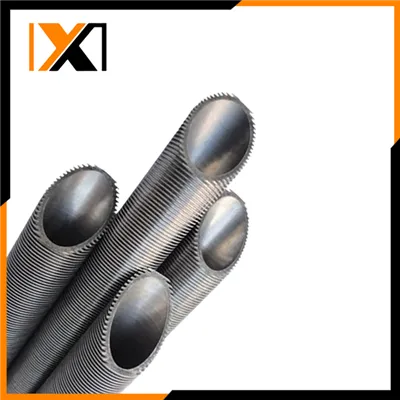
As a supplier of titanium ordinary low fin tubes, one of the most frequently asked questions I encounter is about the service life of these tubes. Understanding the service life of titanium ordinary low fin tubes is crucial for both suppliers and customers, as it directly impacts the efficiency, cost - effectiveness, and reliability of various applications.
Factors Affecting the Service Life of Titanium Ordinary Low Fin Tubes
1. Material Quality
The quality of the titanium used in the manufacturing of the low fin tubes is of utmost importance. High - grade titanium with low impurity levels generally has better corrosion resistance and mechanical properties. Titanium is known for its excellent corrosion resistance due to the formation of a passive oxide layer on its surface. However, if the titanium contains impurities such as iron, carbon, or oxygen in excessive amounts, this passive layer may be less stable, leading to a shorter service life. For example, in a seawater desalination plant, where the tubes are constantly exposed to a highly corrosive environment, high - purity titanium tubes can last significantly longer than those made from lower - quality titanium.
2. Operating Conditions
The operating conditions play a significant role in determining the service life of titanium ordinary low fin tubes. Temperature, pressure, and the nature of the fluid flowing through the tubes are key factors. High - temperature applications can accelerate the diffusion of elements within the titanium, which may affect the integrity of the passive oxide layer. For instance, in a heat exchanger used in a chemical processing plant, if the temperature exceeds the recommended limit for the titanium grade, the corrosion rate may increase, reducing the service life of the tubes.
Pressure also affects the mechanical integrity of the tubes. Excessive pressure can cause deformation, fatigue, or even rupture of the tubes. Moreover, the fluid flowing through the tubes can have a profound impact. Aggressive chemicals, abrasive particles, or high - velocity fluids can all contribute to wear and corrosion. In a power plant's condenser, where water with suspended solids may flow through the tubes, the abrasive action of these solids can gradually erode the tube surface, shortening its service life.
3. Design and Manufacturing Process
The design and manufacturing process of the titanium ordinary low fin tubes can influence their service life. Proper fin design is essential to ensure efficient heat transfer without causing excessive stress on the tube. If the fins are too thick or too closely spaced, it may lead to uneven stress distribution, which can result in cracking or fatigue failure over time.
The manufacturing process, including welding and forming, also affects the tube's quality. Poor welding can introduce defects such as porosity or incomplete fusion, which can become initiation points for corrosion or mechanical failure. For example, in a welded joint of a titanium low fin tube, if the welding parameters are not properly controlled, the joint may be more susceptible to corrosion, reducing the overall service life of the tube.
Typical Service Life Estimates
It is challenging to provide an exact service life for titanium ordinary low fin tubes, as it depends on the factors mentioned above. However, under normal operating conditions, which typically include moderate temperatures (up to 200 - 300°C), low - pressure environments, and non - aggressive fluids, these tubes can have a service life of 10 - 20 years.
In more severe conditions, such as high - temperature chemical processing or abrasive fluid applications, the service life may be reduced to 5 - 10 years. For example, in a petrochemical refinery where the tubes are exposed to high - temperature and corrosive hydrocarbon fluids, the service life may be closer to the lower end of this range.
In some well - maintained and relatively mild applications, such as a domestic water heating system, the titanium ordinary low fin tubes can last even longer, potentially up to 25 years or more.
Extending the Service Life of Titanium Ordinary Low Fin Tubes
1. Regular Maintenance
Regular maintenance is crucial for extending the service life of titanium ordinary low fin tubes. This includes periodic inspections to detect any signs of corrosion, wear, or mechanical damage. Non - destructive testing methods such as ultrasonic testing and eddy - current testing can be used to identify internal defects without damaging the tubes.
Cleaning the tubes to remove any deposits or contaminants is also important. In a heat exchanger, for example, fouling can reduce the heat transfer efficiency and increase the risk of corrosion. Chemical cleaning or mechanical cleaning methods can be employed to keep the tubes clean.
2. Proper Selection of Titanium Grade
Selecting the appropriate titanium grade for the specific application is essential. Different grades of titanium have different properties, such as corrosion resistance and mechanical strength. For applications in highly corrosive environments, grades like Titanium Corrugated Tube Gr2, which has excellent corrosion resistance, may be a better choice. You can find more information about Titanium Corrugated Tube Gr2 on our website.
3. Optimal Design and Installation
Optimal design and installation of the tubes can also contribute to a longer service life. Ensuring proper alignment, support, and stress distribution during installation can prevent premature failure. Additionally, using appropriate gaskets and seals can prevent leakage, which can lead to corrosion and other problems.
Related Products and Their Service Life Considerations
In addition to titanium ordinary low fin tubes, we also offer other related products such as Titanium Corrugated Tube and Titanium Inner Grooved Tube. The service life considerations for these products are similar to those of titanium ordinary low fin tubes.
Titanium corrugated tubes are often used in applications where flexibility and enhanced heat transfer are required. The corrugation design can affect the stress distribution and fluid flow characteristics, which in turn influence the service life. Similar to low fin tubes, proper material selection, operating conditions, and maintenance are crucial for ensuring a long service life.
Titanium inner grooved tubes are designed to improve heat transfer efficiency by increasing the internal surface area. The grooves can enhance the turbulence of the fluid, but they also need to be carefully designed to avoid stress concentration and potential corrosion issues.


Conclusion
In conclusion, the service life of titanium ordinary low fin tubes is influenced by multiple factors, including material quality, operating conditions, design, and manufacturing processes. While it is difficult to provide an exact service life, under normal conditions, these tubes can last 10 - 20 years, and in more severe conditions, 5 - 10 years. By taking appropriate measures such as regular maintenance, proper material selection, and optimal design and installation, the service life of these tubes can be extended.
If you are interested in purchasing titanium ordinary low fin tubes or any of our related products, we encourage you to contact us for further discussion. We have a team of experts who can provide you with detailed information and help you select the most suitable products for your specific needs.
References
- ASM Handbook Volume 2: Properties and Selection: Nonferrous Alloys and Special - Purpose Materials.
- Titanium: A Technical Guide, Second Edition by John C. Williams.
- Corrosion Resistance of Titanium by Y. M. Latanision and W. R. Lankford.