


Titanium Corrugated Tube Gr2
Why Choose Us
High Quality
YEXIANG Metal Tech taking science and technology as the guide, we are committed to the R&D and manufacturing of high-efficiency heat exchange tubes. We have brought together the most advanced high-efficiency heat exchange tube manufacturing technologies, processes and equipment. We rely on years of experience in the development of high-efficiency heat exchange tubes to continuously introduce more efficient products to our customers. At the same time, we also focus on product quality management and have established strict quality management systems and production standards in accordance with European and American standards.
Flexible innovation
YEXIANG is a young company with innovative capabilities. We always regard innovative products to drive the development of the industry as one of our long-term goals!
Integrity and reliability
The trust given to customers means that we are always obligated to provide the best quality. No matter now or in the future, YEXIANG will always do things in a responsible way!
Professional Team
Our professional team collaborate and communicate effectively with one another, and are committed to delivering high-quality results. They are capable of handling complex challenges and projects that require their specialized expertise and experience.
What is Titanium Corrugated Tube
Titanium corrugated tubes are a specialized and innovative form of tubing crafted from titanium, a remarkable metal known for its exceptional properties. The corrugated design distinguishes these tubes with a series of ridges or waves along their length, offering numerous advantages over traditional smooth-walled tubes. One of the most prominent benefits is titanium's exceptional corrosion resistance, making it ideal for applications in industries like chemical processing, petrochemicals, marine, and aerospace, where exposure to aggressive environments is common. This corrosion resistance ensures the longevity and reliability of titanium corrugated tubes even under challenging conditions.
Related Product

They are made from smooth tubes by machining many grooves on the inner surface of smooth tubes. With the help of thee grooves, heat exchange surface becomes bigger, and flow field distribution near the grooves is changes; therefore, compared with smooth tubes, their heat exchange rate and performance is improved greatly. The heat exchange efficiency is 1.5-3 times of smooth tube, while maintaining the required minimum pressure drop range.

Atmospheric corrosion refers to the adsorption of chloride or sulfide after being dissolved in water in a humid atmospheric environment.
The corrosion that occurs on the metal surface can be used as a basis for selecting materials for heat exchangers used in the atmosphere.

Titanium High Performance Condensing Tube
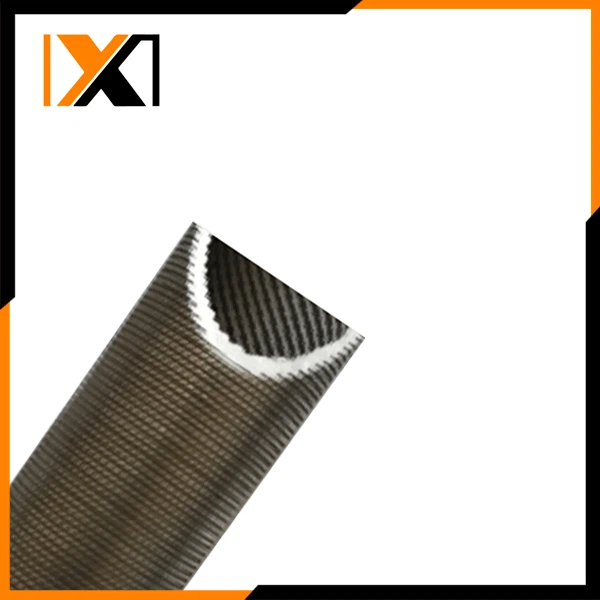
The ends of the fins are equipped with sharp protrusions in both the radial and axial directions, which can pierce the refrigerant liquid film, destroy its surface tension, accelerate the dripping of condensate, and have a high condensation exchange rate.
Titanium High Performance Evaporating Tube
This tube type has a unique fin design. There are specially designed channels under the outer fins to communicate with each other. In a flooded evaporator, this special structure can form a large number of stable vaporization cores and promote liquid evaporation. The vaporization process becomes frequent in and out channels, which promotes the continuous overflow of bubbles when the refrigerant boils, strengthens the boiling effect, and can obtain excellent heat conduction performance, and its heat transfer coefficient can be up to 7 times that of light tubes. At the same time, on this basis, the inner wall of the tube is strengthened to minimize the formation of thermal resistance inside the tube, so that the heat exchange capacity on both sides of the copper tube can be maximized.

Titanium Pool Boiling Evaporator Tube
The fish scales like profiles are distributed uniformly on the enhanced surface of the tube while the circular channels are formed helically under the profiles. The special porous structure has provided lots of nucleation points which are critical in flooded boiling. It has reduced the thickness of the liquid film between the bubbles and the tube wall to decrease the thermal resistance. Meanwhile, it can accelerate the circulation of liquid and bubbles in the fin root channels and cavity pockets due to the thermos-siphon effect, which improves both internal and external convection.

Low-finned tubes are a reliable solution for controlling the temperature of gases and liquids, or for evaporating and condensing refrigerants. Thanks to their larger heat transfer surface area, they offer considerable potential to save in terms of materials and fill volumes. The wide range of dimensions offered by Yexiang Solutions makes these products perfect for a broad scope of applications in the refrigeration and air conditioning industry, for oil/gas coolers in machinery and plant engineering, and for intermediate vapor superheaters in process engineering.
Titanium Corrugated Tube Strength Grade Division Principle
The strength grade of titanium bellows is divided into four levels, which are I, II, III and IV. The division principle is based on the titanium bellows wall thickness, outer diameter, pressure resistance and other parameters for evaluation, the higher the grade represents the greater strength. Specific divisions are as follows:
Grade I
Titanium bellows with wall thickness of 0.2mm, external diameter of 8mm and pressure resistance of 1.0MPa and below.
Grade II
Titanium bellows with a wall thickness of 0.25mm, an external diameter of 10mm, and a pressure resistance of 1.0-2.0 MPa.
Grade III
Titanium bellows with wall thickness of 0.3mm, external diameter of 12mm, pressure resistance of 2.0-3.0MPa.
Grade IV
Titanium bellows wall thickness of 0.35mm and above, outside diameter of 14mm and above, pressure resistance of 3.0MPa and above.
Different grades of titanium bellows are suitable for different scenarios. Generally speaking, low grade titanium bellows is suitable for smaller flow and pressure; high grade titanium bellows is suitable for large flow and high pressure. The specific application scenarios are as follows:
Suitable for low pressure gas and water transportation.
Suitable for low-pressure liquid and gas transportation, such as liquefied petroleum gas, natural gas, etc. 3. Grade III: Suitable for low-pressure liquid and gas transportation.
Suitable for general liquid and gas transportation, such as petroleum, chemical, etc.
Suitable for high pressure and high temperature fluid transportation.
Precautions When Using Titanium Corrugated Tube
The use pressure of titanium bellows should not exceed its pressure range.
When selecting titanium bellows, you need to choose the appropriate material and grade according to the characteristics of the conveying medium.
Titanium bellows will have a certain fatigue life in the process of use, and need to be regularly inspected and replaced.

Titanium Corrugated Tubes Packing & Documentation
Titanium Alloy Corrugated Tubes are surface wash and clean to remove all impurities and stock in the warehouse. Then it is wrapped in thin plastic and also it ends are protected by plastic caps to avoid any damage in transit. Titanium Corrugated Tube is bundled in bubble wrap followed by assorting them in colored plastic bundles. An outer rope is tied to protect the tubing and they are packed in wooden box or container.
MPJ Provide Titanium Corrugated Tubes with all necessary documents such as commercial invoice, packing list, Test Reports, HS Code, Country of Origin attested by the chamber of commerce, Fumigation Certificate, Warranty Letter, and Base Material Certificates. Every lot is supplied with a material test certificate as per EN 10204 NACE 3.1 standards indicating the chemical and mechanical properties of the Titanium Corrugated Tubing.
We also confirm the guarantee of the Titanium Corrugated Tubes supplied as per Purchase order specifications and attest the same in the Material Test Certificate. We also welcome any third party inspection from an agency nominated by the customer to comply with NACE 3.2 Certification if required by the customer at an extra cost.
Titanium Corrugated Tube of Performance
Heat transfer area
The ratio of straight titanium tubes to twisted/threaded titanium tubes is 1.3:1. 1.3 meters of straight titanium tubes are needed after entering 1 meter of titanium threaded tubes (the ratio is directly related to the depth and number of threads.)
Water flow
Titanium threaded tubes have a long heat transfer time because of the high resistance and low flow rate of the medium through the internally threaded channels.
Reactive Turbulence
In the tail flow of the spiral channel, the activity of the molecules will be enhanced and turbulence will be formed.
Scale cleaning
The turbulent flow rotates the flushing shape, increasing the scale cleaning ability.
Construction,size,weld head
Twisted/threaded titanium tubes can unconditionally replace straight titanium tubes, but due to their high efficiency, they require a smaller size.
Total Thermal Efficiency
Twisted/threaded titanium tubing is 1.3 to 2.6 times more efficient than straight titanium tubing. (These factors are directly related to the depth and number of threads.)
Pipe diameter
The pipe diameter range of titanium bellows is usually DN15-DN600, which can be customized according to the actual demand. The standard pipe diameter is expressed in millimeters (mm), such as DN15 means that the pipe diameter is 15mm.
Wall thickness
The wall thickness of titanium bellows depends on the pipe diameter and pressure-bearing capacity. Generally, the wall thickness is between 0.2-0.8mm to meet the requirements of strength and light weight.
Length
The length of titanium bellows depends on the actual application requirements. Generally, the standard length range is between 100-3000mm, but it can be customized to meet specific needs.
Pressure capacity
The pressure-bearing capacity of titanium bellows depends on the pipe diameter, wall thickness and the environment of use. Generally speaking, the range of pressure that can be withstood is between 0.1-6.4MPa. In special cases, higher pressure-bearing capacity can be customized according to customers' requirements.
Connection method
Titanium bellows adopts flange connection method, including standard flange and customized flange. The flange material is generally carbon steel, stainless steel, etc., which can be made according to GB, JB and other standards. Meanwhile, non-standard flanges can also be customized according to customer requirements.
Material
The main material of titanium bellows is titanium and titanium alloy, which has the advantages of excellent corrosion resistance and high strength. Meanwhile, other metal materials or non-metal materials can also be selected according to customer requirements.
Surface treatment
The surface treatment of titanium bellows includes polishing, sandblasting, pickling and other processes to meet the specific needs of customers. After surface treatment, the bellows has better corrosion resistance and aesthetics.
Sealing materials
The sealing material of titanium bellows depends on the actual application, and generally adopts high temperature and corrosion resistant materials such as Viton and PTFE. Other sealing materials can also be selected according to customer requirements.
Installation specification
The installation specification of titanium bellows includes the following aspects.
a) The integrity of the bellows, firmness and sealing of the connectors should be checked before installation.
b) Avoid hard objects scratching and colliding with the bellows during installation.
c) Pressure test should be carried out after installation to ensure the pressure-bearing capacity and sealing performance of the bellows.
d) In the course of use, the connectors and sealing materials of the bellows should be checked regularly to see whether they are intact or not, and should be replaced in time if they are damaged.
Inspection standard
The inspection standard of titanium bellows mainly includes the following aspects.
a) The dimensional tolerance of pipe diameter and wall thickness should be in accordance with the requirements of the relevant standards.
b) The composition and performance of the material should meet the requirements of customers.
c) The quality of surface treatment should meet the requirements of relevant standards.
d) Pressure-bearing capacity and sealing performance of bellows should meet the requirements of relevant standards.
e) The material and performance of connectors and sealing materials shall meet the requirements of relevant standards.
f) For customized products, their specifications and technical parameters shall meet the requirements of customers.
Titanium Corrugated Tube Forming Method
Hydroforming
Hydraulic forming is suitable for processing pure titanium bellows, it is the use of pumps injected into the billet medium pressure (oil or water), forcing the billet in the restriction of the module expansion, and then removed from the module between the positioning support, the use of hydraulic presses or other similar role of the equipment, compression of the billet to the desired final length, remove the module, and then the forming of the corrugated pipe. The characteristics of hydroforming are: during the forming process, the billet is compressed uniformly and the amount of thinning is moderate. Hydroforming is divided into two types: multi-wave one-time forming and single-wave continuous forming.
Roll forming
Roll forming is to put the billet in the forming machine, through the rotation of the working wheel, the working wheel and the contact surface of the billet to produce friction, and rely on the force to drive the whole billet rotary, and then through the downward feeding of the working wheel, that is, the billet on the gradual formation of bumps, that is, the initial wave. At the same time, the shaping wheel gradually axial close, and slow feeding of the working wheel corresponds to, and finally in the circumference of the billet rolled out U-shaped corrugations. Roll forming can be rolled into one or more ripples each time, suitable for processing larger diameter titanium bellows, but due to the large diameter seamless titanium tube is difficult to produce, the molding method is less used. This method can also be placed on the working wheel outside the tube to reduce the size of the forming, suitable for processing titanium bellows with a diameter of <100 mm.
Spin forming
Spin forming is currently the most widely used method of producing titanium bellows, mainly for the production of spiral bellows. Its mold is composed of a working diaphragm and a spacer. After the billet enters the rotating mold, under the action of the diaphragm and spacer, the billet is extruded in both radial and axial directions, resulting in plastic deformation, and gradually shaped into a spiral corrugated pipe. This method generally produces small titanium bellows, for example, Japan with the production of this method for the diameter of 9. 52 mm ~ 28. 6 mm, wall thickness of 0. 3 mm ~ 0. 7 mm, tube length of 6 m within the titanium bellows.
Expansion molding
Expansion forming is pre-installed in the billet with a circular internal mold, the mold is composed of a number of flaps of the module combination, the center of the internal mold has a cylinder to promote the up and down movement of the cone. When the cone down, on the block to produce side pressure, in the force, the module to make the billet by the expansion of the waveform, the cone up after the module by the spring force reset.
Welding forming
Welding is the use of precision welding technology, a number of sheet metal stamping ring diaphragm, alternately welded along its inner and outer edges of the tubular shell with transverse corrugated welded into shape. Its characteristics are: as a result of welding bellows in the manufacturing process, wall thickness and other geometric dimensions are easy to control, so it works better for the production of high-precision bellows; axial compensation is quite large, the maximum can reach 80% of the total length of the bellows, but not pressure-resistant, and the production of high-cost, mostly used for larger sizes, requires a large amount of compensation for the low-pressure titanium bellows. Welding process generally used argon arc welding and plasma arc welding.
Superplastic forming
Superplastic forming is a new bellows forming process, mainly using many titanium alloys such as Ti- 6Al - 4V in the supply state that has superplastic properties of this feature to form the wave depth parameters of titanium alloy bellows. Forming blanks are seamless titanium alloy tubes or welded cylinders made by high-energy beam welding (plasma arc welding, laser welding and vacuum electron beam welding), and the diameter of the titanium alloy bellows that can be produced depends only on the capacity of the superplastic forming machine, which is generally 50-800 mm. The forming process adopts the composite forming process of superplastic pneumatic expansion and axial loading, which is made up of three phases: the expansion phase, the clamping phase and the filling phase.
Super-plastic expansion process is as follows:
(1) Expansion stage: The press does not move, filling argon gas in the billet, so that the billet to produce the appropriate plastic deformation, even if the billet slightly bulging, can make the middle of the template is fixed in the cylinder.
(2) Close the mold stage: Open the press down, press the module.
(3) Filling stage: Continue to press and hold pressure for a period of time, so that all parts of the formed bellows tightly molded. The dimensions of the superplasticized bellows are accurate and there is no residual stress. The disadvantage is that the molding process is a hot process, energy consumption is higher, and the unevenness of wall thickness of the formed parts is higher than that of the hydroformed parts.
Our factory
Shandong YEXIANG Metal Tech Co., Ltd. is located in Binhai High-tech Industrial Park, Linshu County, Linyi City, Shandong Province. Relying on its strong financial strength and advanced high-efficiency heat exchange tube processing technology, YEXIANG Metal has a consistently stable and pragmatic style to gain a foothold in the fierce market competition. With high market share, high-value brand, high-tech content, high quality has established the company's influence in the copper processing industry and has become an excellent supplier to many listed group companies. It has now developed into a complete industrial chain integrating smelting, extrusion, finishing rolling, drawing and annealing. It has been rated as "Top Ten Copper Tube Enterprises" and "Top Taxpayer in the Copper Tube Industry" for many times.

Certificate


FAQ
Hot Tags: titanium corrugated tube gr2, China titanium corrugated tube gr2 manufacturers, suppliers, factory
You Might Also Like


Send Inquiry