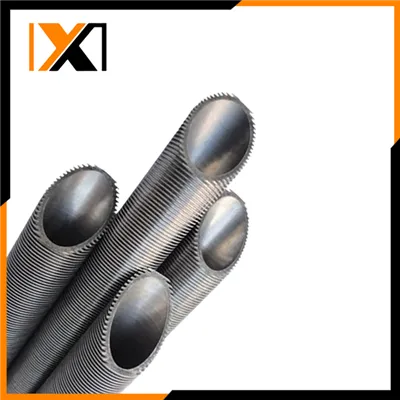
As a supplier of titanium tubes, I've witnessed firsthand the remarkable properties and versatility of these products. Titanium tubes have become increasingly popular in various industries due to their exceptional strength, corrosion resistance, and lightweight nature. One of the key aspects that makes titanium tubes so appealing is their formability. In this blog post, I'll delve into what formability means for titanium tubes, the factors that influence it, and why it matters for different applications.
Understanding Formability
Formability refers to the ability of a material to undergo plastic deformation without cracking or failing. In the context of titanium tubes, it means that the tubes can be shaped, bent, and formed into various geometries to meet the specific requirements of different applications. This is crucial because many industries, such as aerospace, automotive, and chemical processing, often require custom-shaped components that can only be achieved through forming processes.
There are several common forming processes used for titanium tubes, including bending, rolling, and hydroforming. Bending is perhaps the most straightforward process, where the tube is bent into a desired angle or radius using a bending machine. Rolling involves passing the tube through a series of rollers to change its shape, such as reducing its diameter or increasing its wall thickness. Hydroforming, on the other hand, uses high-pressure fluid to shape the tube into a complex geometry within a die.
Factors Influencing the Formability of Titanium Tubes
Chemical Composition
The chemical composition of titanium tubes plays a significant role in their formability. Titanium alloys are often used instead of pure titanium because they offer better mechanical properties and formability. For example, Ti-6Al-4V, one of the most commonly used titanium alloys, contains aluminum and vanadium, which improve its strength and ductility. The presence of these alloying elements can enhance the tube's ability to withstand deformation without cracking.
Microstructure
The microstructure of titanium tubes also affects their formability. A fine-grained microstructure generally provides better formability compared to a coarse-grained one. Fine grains can deform more easily and uniformly, reducing the risk of cracking during forming processes. Heat treatment can be used to control the microstructure of titanium tubes, optimizing their formability for specific applications.
Temperature
Temperature has a profound impact on the formability of titanium tubes. Titanium has a relatively high melting point, and its formability improves significantly at elevated temperatures. Hot forming processes, such as hot bending and hot rolling, are often used to shape titanium tubes because they allow for greater deformation without causing damage to the material. However, it's important to control the temperature carefully to avoid overheating, which can lead to grain growth and a decrease in formability.
Wall Thickness and Diameter
The wall thickness and diameter of titanium tubes also influence their formability. Thinner-walled tubes are generally more formable than thicker-walled ones because they require less force to deform. Similarly, tubes with smaller diameters are easier to form than those with larger diameters. However, the specific requirements of the application will determine the appropriate wall thickness and diameter, and formability must be balanced with other factors such as strength and corrosion resistance.
Importance of Formability in Different Applications
Aerospace Industry
In the aerospace industry, titanium tubes are widely used for various components, including aircraft engines, hydraulic systems, and structural parts. The formability of titanium tubes is crucial in this industry because it allows for the production of complex-shaped components that are lightweight and strong. For example, titanium tubes can be bent and formed into intricate shapes to fit the tight spaces within an aircraft engine, reducing weight and improving fuel efficiency.
Automotive Industry
The automotive industry also benefits from the formability of titanium tubes. Titanium tubes can be used for exhaust systems, suspension components, and other parts that require high strength and corrosion resistance. The ability to form titanium tubes into different shapes allows automotive manufacturers to design more efficient and lightweight vehicles, improving performance and reducing emissions.
Chemical Processing Industry
In the chemical processing industry, titanium tubes are used for heat exchangers, condensers, and other equipment that comes into contact with corrosive chemicals. The formability of titanium tubes is essential in this industry because it enables the production of custom-shaped components that can withstand the harsh chemical environment. For example, titanium tubes can be formed into spirals or coils to increase the surface area of a heat exchanger, improving its efficiency.
Our Titanium Tube Products and Their Formability
As a titanium tube supplier, we offer a wide range of products with excellent formability. Our Titanium High Performance Condensing Tube is designed for use in high-performance condensers, where its formability allows for the creation of complex geometries that enhance heat transfer efficiency. Our Tianium Ordinary Low Fin Tube is another popular product, with its formability enabling the production of finned tubes that increase the surface area for heat exchange. Additionally, our Titanium Corrugated Tube is highly formable, allowing it to be used in applications where flexibility and vibration resistance are required.
Conclusion
The formability of titanium tubes is a critical factor that determines their suitability for various applications. By understanding the factors that influence formability, such as chemical composition, microstructure, temperature, wall thickness, and diameter, we can optimize the production process to ensure that our titanium tubes meet the specific requirements of our customers. Whether you're in the aerospace, automotive, or chemical processing industry, our high-quality titanium tubes with excellent formability can provide you with the solutions you need.


If you're interested in learning more about our titanium tube products or have specific requirements for your application, please don't hesitate to contact us. We're here to assist you with your procurement needs and ensure that you get the best titanium tubes for your project.
References
- "Titanium Alloys: Properties, Processing, and Applications" by John C. Williams
- "Forming Technology of Titanium and Its Alloys" by Y. Kishimoto
- "Advanced Materials for Aerospace Applications" edited by J. W. Jones and R. F. Singer