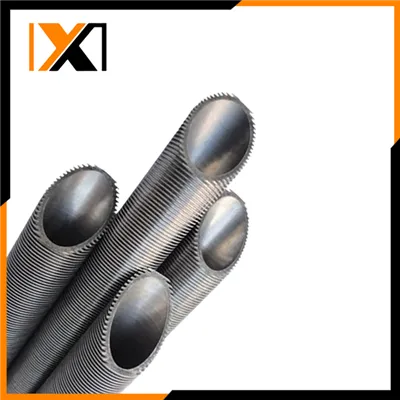
Hey there! As a supplier of copper ordinary low fin tubes, I often get asked about the fin material of these tubes. So, I thought I'd take a few minutes to break it down for you and explain what makes these fins tick.
First off, let's talk about what copper ordinary low fin tubes are. These tubes are a type of heat exchanger tube that have fins on the outside. The fins increase the surface area of the tube, which helps to transfer heat more efficiently. They're commonly used in a variety of applications, including air conditioning, refrigeration, and industrial heat exchangers.
Now, let's get to the good stuff - the fin material. The fins on copper ordinary low fin tubes are typically made of copper. Copper is a great choice for fin material because it has excellent thermal conductivity. This means that it can transfer heat quickly and efficiently from the inside of the tube to the outside, where it can be dissipated into the surrounding environment.
One of the key benefits of using copper as the fin material is its corrosion resistance. Copper is naturally resistant to corrosion, which means that the fins will last longer and require less maintenance. This is especially important in applications where the tubes are exposed to harsh chemicals or environments.
Another advantage of copper fins is their flexibility. Copper is a relatively soft metal, which means that it can be easily formed into the desired shape. This allows for a greater degree of customization when it comes to the design of the fins. For example, the fins can be made in different shapes and sizes to optimize heat transfer performance.


In addition to copper, there are also other materials that can be used for the fins of copper ordinary low fin tubes. Some common alternatives include aluminum and stainless steel. Aluminum is a lightweight and cost-effective option, but it has lower thermal conductivity than copper. Stainless steel, on the other hand, is more corrosion-resistant than copper, but it is also more expensive.
When choosing the fin material for your copper ordinary low fin tubes, it's important to consider your specific application and requirements. If you need high thermal conductivity and corrosion resistance, then copper is likely the best choice. However, if cost is a major factor, then aluminum or stainless steel may be more suitable.
Now, let's take a look at some of the different types of copper tubes that are available. In addition to copper ordinary low fin tubes, we also offer Copper Embossed Tube, Smooth Copper Tube, and Copper High Performance Fin Tube. Each of these tubes has its own unique features and benefits, and we can help you choose the right one for your needs.
Copper embossed tubes have a textured surface that helps to increase the surface area and improve heat transfer performance. Smooth copper tubes, as the name suggests, have a smooth surface and are often used in applications where a clean and sleek appearance is desired. Copper high performance fin tubes have fins that are designed to provide even greater heat transfer efficiency than ordinary low fin tubes.
If you're in the market for copper ordinary low fin tubes or any other type of copper tube, I'd encourage you to get in touch with us. We have a team of experts who can help you choose the right product for your application and provide you with all the information you need to make an informed decision. Whether you're a small business or a large industrial manufacturer, we can offer you high-quality products at competitive prices.
In conclusion, the fin material of copper ordinary low fin tubes is typically copper, which offers excellent thermal conductivity, corrosion resistance, and flexibility. However, there are also other materials available, such as aluminum and stainless steel, which may be more suitable depending on your specific requirements. If you have any questions or need more information, please don't hesitate to contact us. We're here to help you find the perfect solution for your heat transfer needs.
References
- "Copper: Properties and Applications" - Copper Development Association
- "Heat Exchanger Design Handbook" - K. A. Gardner and D. G. Thulukkanam