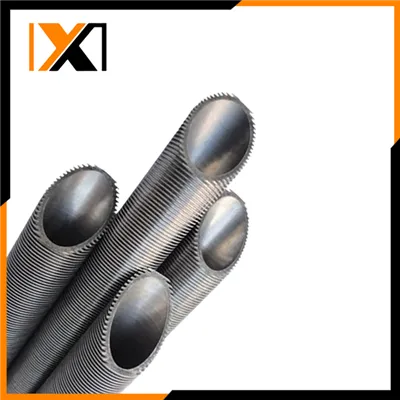
Yo, fellow industry peeps! As a titanium tube supplier, I've got a ton of experience dealing with all sorts of titanium tubes, like the Titanium Inner Grooved Tube, Titanium Corrugated Tube Gr2, and Titanium Pool Boiling Evaporator Tube. One of the most crucial aspects of our business is detecting defects in these tubes. It's not just about quality control; it's about making sure our customers get the best products that meet their needs.
Why Defect Detection Matters
First off, let's talk about why defect detection is so important. Titanium tubes are used in a wide range of applications, from aerospace to chemical processing. A defect in a tube can lead to all sorts of problems, like leaks, reduced performance, and even safety hazards. For example, in an aerospace application, a defective titanium tube could compromise the structural integrity of an aircraft, which is obviously a huge no - no.
In the chemical processing industry, a leak in a titanium tube due to a defect could lead to the release of hazardous chemicals, which can be a danger to the environment and human health. So, it's essential that we catch any defects before the tubes are delivered to our customers.
Visual Inspection
One of the simplest and most straightforward methods of detecting defects in titanium tubes is visual inspection. This is often the first step in the quality control process. When I'm looking at a tube, I'm checking for obvious signs of damage, like cracks, scratches, or dents.
I also look at the surface finish of the tube. If there are any rough spots or uneven areas, it could indicate a problem with the manufacturing process. Sometimes, just a quick look can tell you a lot about the quality of a tube. But visual inspection has its limitations. Some defects, like internal cracks or porosity, can't be seen with the naked eye.
Ultrasonic Testing
That's where ultrasonic testing comes in. Ultrasonic testing is a non - destructive testing method that uses high - frequency sound waves to detect internal defects in the tube. We send ultrasonic waves through the tube, and if there's a defect, the sound waves will bounce back differently than they would in a defect - free tube.
This method is great for detecting things like internal cracks, voids, or inclusions. It's relatively quick and can cover a large area of the tube. But it does require some specialized equipment and trained operators. You can't just pick up an ultrasonic testing device and start using it; you need to know how to interpret the results properly.
Eddy Current Testing
Eddy current testing is another non - destructive testing method that we use to detect defects in titanium tubes. It works by creating an alternating magnetic field in the tube. When there's a defect in the tube, it disrupts the magnetic field, and we can detect these disruptions.
Eddy current testing is particularly good at detecting surface and near - surface defects, like cracks or corrosion. It's also a fast method, which is great for high - volume production. However, it can be affected by factors like the tube's shape and surface condition. So, we need to be careful when using this method and make sure we account for these factors.
X - Ray Testing
For more in - depth inspection, we sometimes use X - ray testing. This method allows us to see inside the tube and detect internal defects that might not be visible with other methods. X - rays can penetrate the titanium and create an image of the internal structure of the tube.
We can then analyze this image to look for any signs of defects, like cracks, porosity, or foreign objects. X - ray testing is very accurate, but it's also more expensive and time - consuming than some of the other methods. Plus, there are safety concerns associated with using X - rays, so we need to take proper precautions.
Liquid Penetrant Testing
Liquid penetrant testing is a simple but effective method for detecting surface - opening defects in titanium tubes. We apply a liquid penetrant to the surface of the tube, and the penetrant seeps into any cracks or pores. After a certain amount of time, we remove the excess penetrant and apply a developer. The developer will draw the penetrant out of the defects, making them visible.


This method is great for detecting small surface cracks that might be missed during visual inspection. It's relatively inexpensive and easy to perform. However, it only works for surface - opening defects, so it's not suitable for detecting internal defects.
Magnetic Particle Testing
Magnetic particle testing is mainly used for ferromagnetic materials, but it can also be used for some titanium alloys that have magnetic properties. We apply a magnetic field to the tube and then sprinkle magnetic particles on the surface. If there's a defect in the tube, the magnetic field will be disrupted, and the magnetic particles will gather at the site of the defect.
This method is quick and easy to use, and it can detect surface and near - surface defects. But since most titanium alloys are non - ferromagnetic, its application is somewhat limited in our industry.
Conclusion
In conclusion, detecting defects in titanium tubes is a multi - step process that involves a combination of different testing methods. Each method has its own advantages and limitations, and we need to choose the right method depending on the type of defect we're looking for and the specific requirements of the tube.
As a titanium tube supplier, we're committed to providing high - quality products to our customers. That's why we take defect detection so seriously. We want to make sure that every tube we deliver is defect - free and meets the highest standards of quality.
If you're in the market for titanium tubes or have any questions about defect detection or our products, don't hesitate to reach out to us. We're always here to help and have a great team ready to discuss your needs and requirements. Whether you need the Titanium Inner Grooved Tube, Titanium Corrugated Tube Gr2, or Titanium Pool Boiling Evaporator Tube, we've got you covered.
References
-ASM Handbook Volume 17: Nondestructive Evaluation and Quality Control
- Nondestructive Testing Handbook, Vol. 7, Second Edition
- ASTM Standards Related to Titanium Tubes and Nondestructive Testing