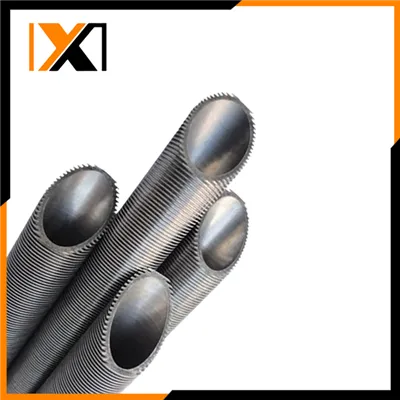
Hey there! I'm an aluminium brass tube supplier, and today I wanna chat about how temperature change affects the length of aluminium brass tubes. It's a topic that's super important in our line of work, and understanding it can help you make better decisions when it comes to choosing the right tubes for your projects.
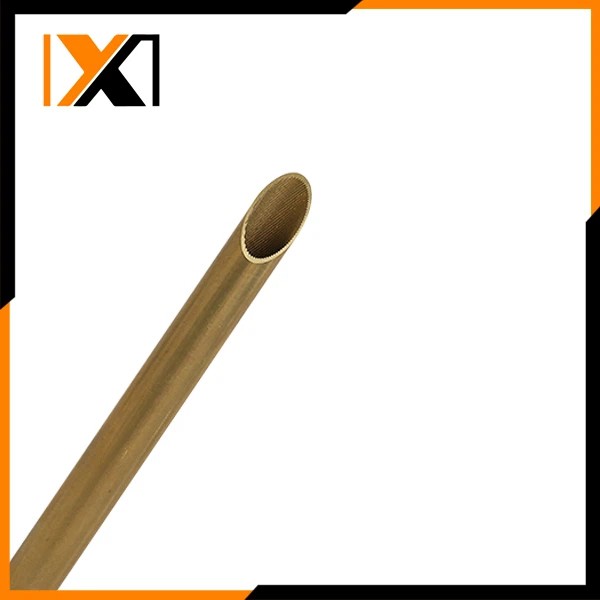
Let's start with the basics. Aluminium brass is an alloy made up of copper, zinc, and aluminium. It's known for its excellent corrosion resistance, high strength, and good thermal conductivity. These properties make it a popular choice for a wide range of applications, including heat exchangers, condensers, and plumbing systems.
Now, when it comes to temperature change, all materials expand or contract. This is due to the fact that as the temperature rises, the atoms in the material vibrate more vigorously, causing the material to expand. Conversely, as the temperature drops, the atoms vibrate less, and the material contracts. This phenomenon is known as thermal expansion.
The amount of expansion or contraction that a material undergoes is determined by its coefficient of thermal expansion (CTE). The CTE is a measure of how much a material expands or contracts per unit length per degree of temperature change. Different materials have different CTEs, and the CTE of aluminium brass is relatively high compared to some other metals.
So, how does this thermal expansion affect the length of aluminium brass tubes? Well, let's say you have an aluminium brass tube that's 1 meter long at room temperature (around 20°C). If the temperature of the tube increases by 100°C, the tube will expand. Using the CTE of aluminium brass, which is approximately 18 x 10^-6 per °C, we can calculate the change in length.
The formula for calculating the change in length (ΔL) due to thermal expansion is:
ΔL = L₀ * α * ΔT
where L₀ is the original length of the tube, α is the coefficient of thermal expansion, and ΔT is the change in temperature.

Plugging in the values, we get:
ΔL = 1 * 18 x 10^-6 * 100 = 0.0018 meters or 1.8 millimeters
So, in this example, the 1-meter-long aluminium brass tube would expand by 1.8 millimeters when the temperature increases by 100°C.
This expansion can have significant implications in various applications. For instance, in a heat exchanger, the tubes need to be able to expand and contract without causing any damage to the system. If the tubes are not allowed to expand freely, they can experience stress, which can lead to cracking or failure.
On the other hand, in some applications, such as plumbing systems, the expansion of the tubes needs to be accounted for to prevent leaks or damage to the pipes. This is why it's important to use proper installation techniques and allow for some flexibility in the system.
Now, let's talk about the different types of aluminium brass tubes we offer. We have a wide range of products to suit different needs, including En 12451 Cuzn20 Al2as Aluminium Brass Pipe C68700, Aluminium Brass Hemp Tube, and Aluminium Brass Corrugated Tube.
The En 12451 Cuzn20 Al2as Aluminium Brass Pipe C68700 is a high-quality pipe that's widely used in marine and industrial applications. It has excellent corrosion resistance and is able to withstand high temperatures and pressures.
The Aluminium Brass Hemp Tube is a unique product that's designed for use in applications where flexibility is required. It's made from a special type of aluminium brass that has a high degree of ductility, allowing it to be bent and shaped easily.
The Aluminium Brass Corrugated Tube is another popular product that's used in a variety of applications, including automotive and aerospace. The corrugations in the tube provide additional flexibility and strength, making it ideal for use in situations where the tube needs to be able to withstand vibration and movement.
When choosing the right aluminium brass tube for your project, it's important to consider the temperature range that the tube will be exposed to. If the temperature changes are significant, you may need to choose a tube with a lower CTE or use a design that allows for the expansion and contraction of the tube.
In addition to temperature, other factors that can affect the performance of aluminium brass tubes include pressure, corrosion, and mechanical stress. It's important to take these factors into account when selecting the right tube for your application.
If you're in the market for aluminium brass tubes, I'd love to help you find the right product for your needs. Whether you're a small business or a large corporation, we have the expertise and the products to meet your requirements.
So, if you have any questions or if you'd like to discuss your project in more detail, feel free to get in touch. We're here to help you make the best decision for your business.
References
- Callister, W. D., & Rethwisch, D. G. (2012). Materials Science and Engineering: An Introduction. Wiley.
- ASM Handbook Committee. (2000). ASM Handbook Volume 2: Properties and Selection: Nonferrous Alloys and Special-Purpose Materials. ASM International.