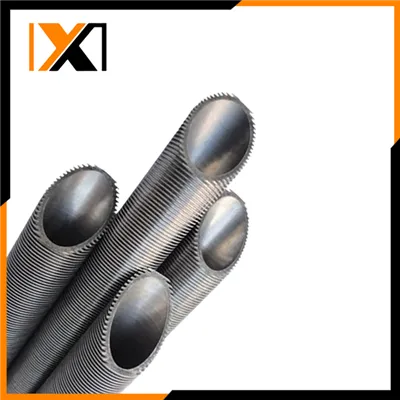
As a supplier of aluminium brass corrugated tubes, I often receive inquiries from customers about the thermal conductivity of these tubes. Thermal conductivity is a crucial property, especially in applications where efficient heat transfer is required. In this blog post, I'll delve into the thermal conductivity of aluminium brass corrugated tubes, exploring its significance, influencing factors, and how it compares to other materials.
Understanding Thermal Conductivity
Thermal conductivity, denoted by the symbol k, is a measure of a material's ability to conduct heat. It is defined as the quantity of heat (Q) transmitted through a unit thickness (L) of a material in a direction normal to a surface of unit area (A) due to a unit temperature gradient (ΔT). Mathematically, it is expressed as:
[k = \frac{Q \cdot L}{A \cdot \Delta T}]
The SI unit of thermal conductivity is watts per meter - kelvin (W/(m·K)). A high thermal conductivity value indicates that a material can transfer heat quickly, while a low value means that the material is a poor conductor of heat and may act as an insulator.
Thermal Conductivity of Aluminium Brass
Aluminium brass is a copper - based alloy that contains zinc and aluminium as the main alloying elements. The addition of these elements imparts specific properties to the alloy, including enhanced corrosion resistance and good mechanical properties. The thermal conductivity of aluminium brass typically ranges from 70 to 100 W/(m·K). This value is lower than that of pure copper, which has a thermal conductivity of around 400 W/(m·K), but higher than many other common metals and alloys.
The exact thermal conductivity of aluminium brass depends on its chemical composition. For example, the En 12451 Cuzn20 Al2as Aluminium Brass Pipe C68700 has a specific chemical makeup that affects its heat - conducting ability. The presence of zinc and aluminium in specific proportions can either increase or decrease the thermal conductivity compared to other aluminium brass alloys.
Factors Affecting the Thermal Conductivity of Aluminium Brass Corrugated Tubes
- Alloy Composition: As mentioned earlier, the chemical composition of aluminium brass plays a significant role in determining its thermal conductivity. Different amounts of zinc, aluminium, and other trace elements can alter the crystal structure of the alloy, which in turn affects the movement of heat - carrying electrons and phonons. For instance, an increase in the aluminium content may lead to a decrease in thermal conductivity due to the formation of intermetallic compounds that impede the flow of heat.
- Temperature: Thermal conductivity is also temperature - dependent. In general, the thermal conductivity of metals decreases with increasing temperature. This is because as the temperature rises, the lattice vibrations in the metal increase, which scatters the electrons and phonons responsible for heat transfer. For aluminium brass corrugated tubes, the operating temperature can have a notable impact on their heat - transfer efficiency.
- Microstructure: The microstructure of the aluminium brass, such as grain size and the presence of precipitates, can influence its thermal conductivity. A fine - grained microstructure may provide more grain boundaries, which can scatter heat - carrying particles and reduce the thermal conductivity. On the other hand, a well - annealed structure with large grains may allow for more efficient heat transfer.
- Corrugation Design: The corrugated shape of the tube can also affect its thermal conductivity. Corrugations increase the surface area of the tube, which enhances the heat - transfer rate between the fluid inside the tube and the surrounding environment. However, the corrugations can also introduce additional resistance to the flow of heat due to the complex geometry. The design of the corrugations, including their pitch, depth, and shape, needs to be optimized to achieve the best balance between surface area enhancement and heat - transfer resistance.
Applications and the Importance of Thermal Conductivity
Aluminium brass corrugated tubes are widely used in various heat - transfer applications, such as condensers, heat exchangers, and cooling systems. In these applications, the thermal conductivity of the tubes is of utmost importance as it directly affects the efficiency of the heat - transfer process.

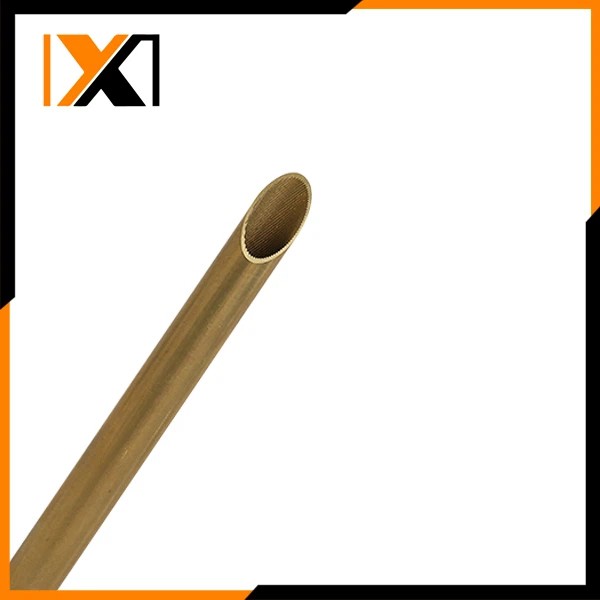
For example, in a condenser, the aluminium brass corrugated tubes are used to transfer heat from the vapor to the cooling water. A higher thermal conductivity allows for more rapid heat transfer, which means that the vapor can be condensed more efficiently. This leads to improved performance of the entire system and can result in energy savings.
The Aluminium Brass High Performance Condensing Tube is specifically designed for such applications, where high - efficiency heat transfer is required. Its unique composition and design ensure that it can meet the demanding requirements of modern condensing systems.
Comparison with Other Materials
When compared to other materials commonly used in heat - transfer applications, aluminium brass corrugated tubes offer a good balance between thermal conductivity, corrosion resistance, and cost.
- Stainless Steel: Stainless steel has a relatively low thermal conductivity, typically in the range of 15 - 20 W/(m·K). This makes it a less efficient heat - transfer material compared to aluminium brass. However, stainless steel is highly resistant to corrosion, which makes it suitable for applications where the environment is highly corrosive.
- Carbon Steel: Carbon steel has a thermal conductivity of around 50 - 60 W/(m·K), which is lower than that of aluminium brass. Additionally, carbon steel is prone to corrosion, especially in the presence of moisture and certain chemicals. Therefore, in applications where corrosion resistance and good heat - transfer properties are required, aluminium brass is a better choice.
How We Ensure Optimal Thermal Conductivity
As a supplier of aluminium brass corrugated tubes, we take several steps to ensure that our products have optimal thermal conductivity.
- Precise Alloying: We carefully control the chemical composition of the aluminium brass during the manufacturing process. By using high - quality raw materials and advanced alloying techniques, we can achieve the desired composition that maximizes the thermal conductivity while maintaining other important properties such as corrosion resistance.
- Heat Treatment: Heat treatment processes, such as annealing, are used to optimize the microstructure of the aluminium brass. Annealing helps to reduce internal stresses and refine the grain structure, which can improve the thermal conductivity of the tubes.
- Corrugation Design Optimization: Our engineering team uses advanced design tools to optimize the corrugation design of the tubes. We consider factors such as the pitch, depth, and shape of the corrugations to ensure that they enhance the heat - transfer surface area without introducing excessive resistance to heat flow.
Contact Us for Your Aluminium Brass Corrugated Tube Needs
If you are in the market for high - quality aluminium brass corrugated tubes with excellent thermal conductivity, we are here to help. Our products, such as the En 12451 Cuzn20 Al2as Aluminium Brass C44300, are designed to meet the most demanding heat - transfer applications.
Whether you need tubes for a small - scale project or a large - scale industrial application, we can provide you with the right solution. Contact us today to discuss your requirements and start a procurement negotiation. Our team of experts is ready to assist you in finding the best aluminium brass corrugated tubes for your specific needs.
References
- Incropera, F. P., DeWitt, D. P., Bergman, T. L., & Lavine, A. S. (2007). Fundamentals of Heat and Mass Transfer. John Wiley & Sons.
- ASM Handbook Committee. (2001). ASM Handbook: Properties and Selection: Nonferrous Alloys and Special - Purpose Materials. ASM International.
- Copper Development Association. (2015). Copper and Copper Alloys: Properties, Applications, and Performance. Copper Development Association.