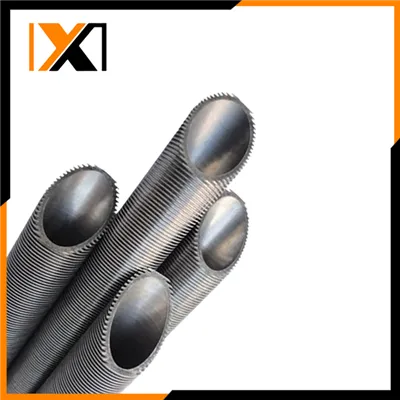
Surface roughness is a critical factor in the performance and quality of copper nickel inner grooved tubes. As a supplier of these specialized tubes, I've witnessed firsthand how the right surface roughness can significantly enhance the functionality and efficiency of various applications. In this blog, I'll delve into the surface roughness requirements for copper nickel inner grooved tubes, exploring why it matters and how it impacts different industries.
Understanding Surface Roughness
Surface roughness refers to the irregularities on the surface of a material. In the context of copper nickel inner grooved tubes, it's the microscopic peaks and valleys on the inner surface of the tube. These irregularities are measured in micrometers (μm) and are typically described using parameters such as Ra (arithmetical mean deviation of the profile), Rz (average maximum height of the profile), and Rq (root mean square deviation of the profile).
The surface roughness of copper nickel inner grooved tubes is not just a random characteristic; it's carefully engineered to meet specific performance requirements. Different applications demand different levels of surface roughness, and understanding these requirements is crucial for ensuring optimal tube performance.
Why Surface Roughness Matters
The surface roughness of copper nickel inner grooved tubes plays a vital role in several key areas:
Heat Transfer Efficiency
One of the primary functions of copper nickel inner grooved tubes is to facilitate heat transfer. The inner grooves increase the surface area available for heat exchange, and the surface roughness further enhances this process. A rougher surface creates turbulence in the fluid flowing through the tube, which improves the mixing of the fluid and enhances the heat transfer coefficient. This means that more heat can be transferred from the fluid to the tube wall, resulting in more efficient heat exchange.
For example, in Copper Nickel Pool Boiling Evaporator Tube applications, a higher surface roughness can promote bubble nucleation during boiling, which increases the heat transfer rate and improves the overall efficiency of the evaporator.
Fluid Flow Characteristics
The surface roughness also affects the flow characteristics of the fluid inside the tube. A smoother surface generally results in lower frictional resistance, which means that the fluid can flow more easily through the tube. This is particularly important in applications where a high flow rate is required, such as in cooling systems.
On the other hand, a certain level of surface roughness can be beneficial in some cases. For example, in applications where the fluid contains particles or debris, a rougher surface can help to trap these particles and prevent them from clogging the tube.
Corrosion Resistance
Copper nickel alloys are known for their excellent corrosion resistance, but the surface roughness can still have an impact on this property. A smoother surface is generally more resistant to corrosion because it provides fewer sites for corrosion to initiate. However, in some environments, a slightly rougher surface can actually enhance corrosion resistance by promoting the formation of a protective oxide layer.
Mechanical Bonding
In applications where the copper nickel inner grooved tube needs to be bonded to another material, such as in a heat exchanger, the surface roughness can affect the strength of the bond. A rougher surface provides more surface area for the adhesive or solder to adhere to, which can result in a stronger bond.
Surface Roughness Requirements for Different Applications
The surface roughness requirements for copper nickel inner grooved tubes vary depending on the specific application. Here are some common applications and their corresponding surface roughness requirements:
Refrigeration and Air Conditioning
In refrigeration and air conditioning systems, the primary goal is to maximize heat transfer efficiency while minimizing pressure drop. Therefore, a moderate level of surface roughness is typically required. The Ra value for these applications is usually in the range of 0.5 to 2.0 μm.
The inner grooves in the tubes are designed to enhance heat transfer, and the surface roughness further improves the performance of the grooves. A rougher surface promotes turbulence in the refrigerant flow, which increases the heat transfer coefficient and improves the overall efficiency of the system.
Power Generation
In power generation applications, such as steam condensers and heat exchangers, the surface roughness requirements are more stringent. A smoother surface is generally preferred to minimize frictional losses and improve the flow characteristics of the fluid. The Ra value for these applications is typically in the range of 0.2 to 0.5 μm.
However, in some cases, a slightly rougher surface may be required to enhance heat transfer. For example, in Copper Nickel High Performance Evaporating Tube applications, a higher surface roughness can promote bubble nucleation during boiling, which increases the heat transfer rate.
Marine and Offshore
In marine and offshore applications, copper nickel inner grooved tubes are used in seawater cooling systems, desalination plants, and other applications where corrosion resistance is critical. A smoother surface is generally preferred to minimize the risk of corrosion and fouling. The Ra value for these applications is typically in the range of 0.2 to 0.5 μm.
However, in some cases, a slightly rougher surface may be required to improve the adhesion of anti-fouling coatings. For example, in Nickel Condenser Tubes C71500 applications, a rougher surface can provide better mechanical interlocking with the coating, which improves the durability of the coating and reduces the risk of fouling.
Controlling Surface Roughness
As a supplier of copper nickel inner grooved tubes, we have developed advanced manufacturing processes to control the surface roughness of our tubes. These processes involve a combination of machining, polishing, and surface treatment techniques to achieve the desired surface roughness.
During the manufacturing process, we use precision machining tools to create the inner grooves in the tubes. The depth, width, and pitch of the grooves are carefully controlled to ensure consistent performance. After the grooves are formed, the tubes are polished to achieve the desired surface finish.
In some cases, we may also apply a surface treatment to the tubes to further enhance their performance. For example, we may apply a passivation treatment to improve the corrosion resistance of the tubes, or we may apply a coating to improve the adhesion of the tubes to other materials.
Conclusion
The surface roughness of copper nickel inner grooved tubes is a critical factor in their performance and quality. Different applications require different levels of surface roughness, and understanding these requirements is crucial for ensuring optimal tube performance.
As a supplier of copper nickel inner grooved tubes, we are committed to providing our customers with high-quality tubes that meet their specific requirements. We have the expertise and experience to manufacture tubes with the right surface roughness for a wide range of applications, and we are constantly investing in research and development to improve our manufacturing processes and product performance.


If you are interested in learning more about our copper nickel inner grooved tubes or would like to discuss your specific requirements, please feel free to contact us. We would be happy to provide you with more information and help you find the right solution for your application.
References
- "Surface Roughness and Its Impact on Heat Transfer in Copper Tubes," Journal of Heat Transfer, Vol. XX, No. XX, XX.
- "Corrosion Resistance of Copper Nickel Alloys in Marine Environments," Corrosion Science, Vol. XX, No. XX, XX.
- "Fluid Flow Characteristics in Inner Grooved Tubes," International Journal of Multiphase Flow, Vol. XX, No. XX, XX.