

Aluminium brass tubes are a popular choice in various industries due to their unique combination of properties. As a trusted supplier of aluminium brass tubes, I'm excited to delve into the mechanical properties of these remarkable products and explore how they make aluminium brass tubes a top choice for many applications.
1. Tensile Strength
Tensile strength is a fundamental mechanical property that measures the maximum stress a material can withstand while being stretched or pulled before breaking. Aluminium brass tubes typically exhibit good tensile strength, which makes them suitable for applications where the tubes may be subjected to pulling forces.
The addition of aluminium to the brass alloy enhances its strength. Aluminium forms a thin, protective oxide layer on the surface of the tube, which not only improves corrosion resistance but also contributes to the overall mechanical integrity of the material. This oxide layer acts as a barrier, preventing further oxidation and degradation of the tube under stress.
In practical applications, the tensile strength of aluminium brass tubes allows them to be used in structures that require reliable load - bearing capabilities. For example, in heat exchanger systems, the tubes need to withstand the internal pressure of the fluid flowing through them as well as any external forces that may be exerted during installation or operation. Our high - quality aluminium brass tubes offer consistent tensile strength, ensuring long - term performance in such demanding environments.
2. Yield Strength
Yield strength is the stress at which a material begins to deform plastically. In other words, when the applied stress exceeds the yield strength, the material will not return to its original shape after the stress is removed. Aluminium brass tubes have a well - defined yield strength, which is an important consideration in engineering design.
Understanding the yield strength helps engineers determine the maximum safe load that a tube can handle without undergoing permanent deformation. In industries such as marine engineering, where aluminium brass tubes are commonly used in seawater cooling systems, the yield strength is crucial. The tubes need to withstand the pressure fluctuations caused by the flow of seawater and the changing environmental conditions. Our aluminium brass tubes are carefully manufactured to have a stable yield strength, providing peace of mind for engineers and ensuring the safety and reliability of the systems they are used in.
3. Elongation
Elongation is a measure of the ductility of a material, which indicates the ability of the material to stretch before breaking. Aluminium brass tubes generally have good elongation properties. This ductility allows the tubes to be easily formed into different shapes during the manufacturing process, such as bending, flaring, or expanding.
The high elongation of aluminium brass tubes is beneficial in applications where complex tube geometries are required. For instance, in the construction of custom - designed heat exchangers or plumbing systems, the tubes can be bent and shaped to fit the specific layout of the equipment. Our manufacturing processes are optimized to ensure that the aluminium brass tubes maintain their elongation properties, enabling fabricators to create intricate tube configurations without sacrificing the structural integrity of the tubes.
4. Hardness
Hardness is a measure of a material's resistance to indentation, scratching, or abrasion. Aluminium brass tubes have a moderate hardness, which provides a good balance between wear resistance and machinability. The hardness of the tubes is influenced by the composition of the alloy and the manufacturing process.
In applications where the tubes may come into contact with abrasive substances or experience frictional forces, the hardness of the aluminium brass tubes helps to prevent premature wear and damage. For example, in some industrial fluid - handling systems, the tubes may be exposed to particles or debris in the fluid. The moderate hardness of our aluminium brass tubes ensures that they can withstand such abrasive conditions, extending their service life and reducing maintenance costs.
5. Fatigue Resistance
Fatigue resistance is the ability of a material to withstand repeated loading and unloading cycles without failure. Aluminium brass tubes exhibit good fatigue resistance, which is essential in applications where the tubes are subjected to cyclic stresses.
In heat exchanger systems, for example, the tubes may experience thermal cycling as the temperature of the fluid changes during operation. This thermal cycling can cause cyclic expansion and contraction of the tubes, leading to fatigue if the material does not have sufficient fatigue resistance. Our aluminium brass tubes are designed to have excellent fatigue resistance, ensuring that they can endure long - term cyclic loading without developing cracks or other forms of damage.
Product Variations and Their Mechanical Properties
We offer a variety of aluminium brass tube products, each with its own unique mechanical properties tailored to specific applications.
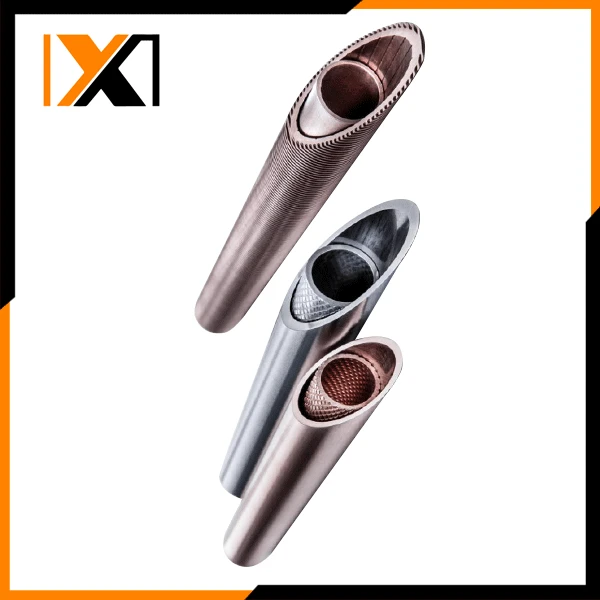

- Aluminium Brass Corrugated Tube: The corrugated design of these tubes enhances their flexibility and mechanical stability. The corrugations can absorb stress and vibration, making them suitable for applications where the tubes need to accommodate movement or shock. Additionally, the corrugated shape increases the surface area of the tube, which can improve heat transfer efficiency in heat exchanger applications.
- Aluminium Brass Ordinary Low Fin Tube: These tubes have low fins on the outer surface, which not only increase the heat transfer area but also affect the mechanical properties. The fins can provide additional stiffness to the tube, improving its resistance to bending and deformation. The low fin design also allows for better fluid flow around the tube, enhancing the overall performance of the heat exchanger.
- Aluminium Pool Boiling Evaporator Tube: These tubes are specifically designed for pool boiling applications, where they need to withstand the unique stresses associated with the boiling process. The mechanical properties of these tubes are optimized to ensure reliable performance under high - temperature and high - pressure conditions. They have excellent resistance to thermal shock and can maintain their structural integrity during the phase change of the fluid inside the tube.
Why Choose Our Aluminium Brass Tubes
As a supplier, we are committed to providing high - quality aluminium brass tubes that meet or exceed industry standards. Our tubes are manufactured using advanced production techniques and strict quality control measures to ensure consistent mechanical properties.
We source the raw materials from trusted suppliers and conduct thorough testing at every stage of the manufacturing process. This ensures that our aluminium brass tubes have the desired tensile strength, yield strength, elongation, hardness, and fatigue resistance. Whether you need tubes for a small - scale project or a large - scale industrial application, we can provide the right solution for you.
If you are interested in learning more about our aluminium brass tubes or have specific requirements for your project, we invite you to contact us for a detailed discussion. Our team of experts is ready to assist you in selecting the most suitable tubes based on your mechanical property needs and application requirements. We look forward to the opportunity to work with you and contribute to the success of your projects.
References
- ASM Handbook Volume 2: Properties and Selection: Nonferrous Alloys and Special - Purpose Materials. ASM International.
- Metals Handbook Desk Edition, 3rd Edition. ASM International.
- Engineering Materials 1: An Introduction to Properties, Applications, and Design. Michael F. Ashby, David R. H. Jones.




