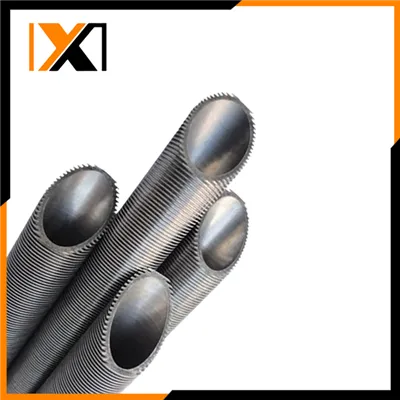
As a trusted supplier of copper ordinary low fin tubes, I'm excited to take you through the intricate manufacturing process of these essential components. Copper ordinary low fin tubes are widely used in various industries, including HVAC, refrigeration, and heat exchangers, thanks to their excellent thermal conductivity and durability.
Raw Material Selection
The first step in manufacturing copper ordinary low fin tubes is the careful selection of raw materials. At our facility, we source high - quality copper for its superior thermal properties. One of the common copper types used is C12200, which offers excellent corrosion resistance and formability. If you are interested in our smooth copper tube made from C12200, you can visit Smooth Copper Tube C12200.


Another option is C71500, a copper - nickel alloy. Our Copper Corrugated Tube C71500 showcases the unique characteristics of this alloy. The choice of copper or copper alloy depends on the specific requirements of the end - use application, such as the operating temperature, pressure, and the nature of the fluid it will carry.
Tube Manufacturing
Once the raw material is selected, the process of creating the base tube begins. This typically involves extrusion. In the extrusion process, the copper billet is heated to a specific temperature to make it malleable. Then, it is forced through a die to create a tube of the desired diameter and wall thickness. This initial tube is often referred to as a smooth tube. Our Copper Square Tube C12200 is also produced through a similar extrusion process, with a customized die to achieve the square shape.
After extrusion, the tubes undergo a series of quality checks. These checks include dimensional inspection to ensure the tube meets the specified diameter, wall thickness, and length requirements. Non - destructive testing methods, such as ultrasonic testing, are used to detect any internal defects, like cracks or porosity, that could affect the tube's performance.
Finning Process
The finning process is the key step that transforms a smooth copper tube into a copper ordinary low fin tube. There are several methods for adding fins to the tube, but the most common one is the mechanical roll - finning process.
In mechanical roll - finning, the smooth tube is fed through a set of rollers equipped with a specially designed finning tool. As the tube passes through the rollers, the finning tool cuts and forms the fins on the outer surface of the tube. The shape and dimensions of the fins, such as the fin height, pitch, and thickness, can be precisely controlled by adjusting the parameters of the finning tool and the roller system.
The number of fins per unit length is also an important characteristic. For a copper ordinary low fin tube, the fin density is typically lower compared to high - fin tubes, which makes it suitable for applications where moderate heat transfer enhancement is required. The fins increase the surface area of the tube, which significantly improves the heat transfer efficiency between the fluid inside the tube and the surrounding environment.
Heat Treatment
After the finning process, the tubes may undergo heat treatment to relieve stresses induced during the manufacturing process. Heat treatment can also improve the mechanical properties of the copper, such as its hardness and toughness.
The heat treatment process involves heating the tubes to a specific temperature and holding them at that temperature for a certain period, followed by controlled cooling. The exact heat treatment parameters depend on the type of copper or copper alloy used and the desired properties of the final product.
Surface Treatment
Surface treatment is an important step to enhance the corrosion resistance and durability of the copper ordinary low fin tubes. One common surface treatment method is passivation. In passivation, the tubes are immersed in a chemical solution that forms a thin, protective oxide layer on the copper surface. This oxide layer acts as a barrier against corrosion, prolonging the service life of the tubes, especially in harsh environments.
Another surface treatment option is plating. For example, nickel plating can be applied to the fins to further improve their corrosion resistance. Plating can also provide a smooth surface finish, which reduces the risk of fouling and makes the tubes easier to clean.
Final Inspection and Packaging
Once all the manufacturing processes are completed, the copper ordinary low fin tubes are subjected to a final inspection. This inspection includes a comprehensive check of the tube's dimensions, fin quality, surface finish, and overall performance. Only tubes that meet our strict quality standards are approved for shipment.
After passing the final inspection, the tubes are carefully packaged to prevent damage during transportation. We use appropriate packaging materials, such as plastic sleeves, wooden crates, or cardboard boxes, depending on the size and quantity of the tubes.
Why Choose Our Copper Ordinary Low Fin Tubes
Our company is committed to providing high - quality copper ordinary low fin tubes. We have state - of - the - art manufacturing facilities and a team of experienced engineers and technicians who ensure that every tube meets the highest quality standards.
We offer a wide range of copper ordinary low fin tubes with different specifications, including various tube diameters, wall thicknesses, fin heights, and pitches, to meet the diverse needs of our customers. Whether you are in the HVAC industry, refrigeration business, or any other field that requires efficient heat transfer, our products can provide the solution you need.
If you are interested in our copper ordinary low fin tubes or have any questions about the manufacturing process, applications, or pricing, please feel free to contact us. We look forward to discussing your requirements and collaborating with you on your next project.
References
- ASM Handbook Committee. (2004). ASM Handbook: Copper and Copper Alloys. ASM International.
- Incropera, F. P., & DeWitt, D. P. (1996). Fundamentals of Heat and Mass Transfer. John Wiley & Sons.