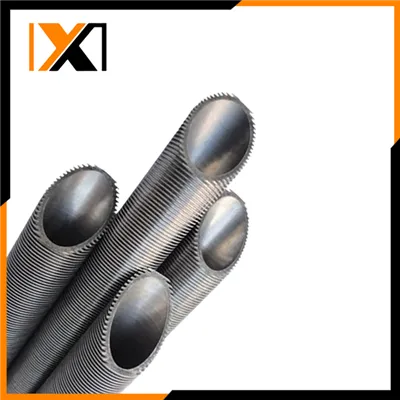
As a provider of copper inner grooved tubes, I've witnessed firsthand the significance of various factors in determining the performance of these tubes. One such factor that often goes under the radar but holds substantial influence is the tube wall porosity. In this blog, we'll delve into what tube wall porosity is and how it impacts the performance of copper inner grooved tubes.
Understanding Tube Wall Porosity
Tube wall porosity refers to the presence of small voids or pores within the tube wall. These pores can vary in size, shape, and distribution. They can be a result of the manufacturing process, such as the presence of gas bubbles during casting or improper sintering in powder metallurgy processes. In the context of copper inner grooved tubes, porosity can occur due to impurities in the copper, uneven cooling during production, or issues with the forming techniques used to create the inner grooves.
Heat Transfer Performance
One of the primary functions of copper inner grooved tubes is to facilitate efficient heat transfer. The porosity of the tube wall can have a profound impact on this aspect.
Positive Effects
In some cases, a certain level of controlled porosity can enhance heat transfer. The pores can act as additional nucleation sites for boiling. When a fluid is flowing through the tube and undergoing a phase change, such as from liquid to vapor in an evaporator, these nucleation sites can promote the formation of vapor bubbles. The increased number of bubbles leads to enhanced agitation of the fluid, improving the convective heat transfer coefficient. This means that more heat can be transferred from the tube wall to the fluid in a given amount of time.
For example, in a Copper Falling Film Evaporator Tube, where a thin film of liquid falls over the inner surface of the tube and evaporates, the presence of pores can help in the rapid formation of vapor bubbles. This can lead to a more efficient evaporation process and ultimately improve the overall performance of the evaporator.
Negative Effects
However, excessive porosity can have detrimental effects on heat transfer. Large or interconnected pores can act as thermal barriers. They reduce the effective cross - sectional area of the tube wall through which heat can be conducted. Heat has to travel around these pores, increasing the thermal resistance. As a result, the rate of heat transfer from the outer surface of the tube to the inner fluid is reduced.
Moreover, if the pores are filled with non - condensing gases, such as air, these gases can further impede heat transfer. Non - condensing gases have low thermal conductivity compared to copper, and they can form a layer between the tube wall and the working fluid, reducing the heat transfer efficiency.
Mechanical Strength
The mechanical strength of copper inner grooved tubes is crucial, especially in applications where the tubes are subjected to high pressures or vibrations. Tube wall porosity can significantly affect the mechanical properties of the tubes.
Weakening of the Structure
Porosity acts as stress concentrators within the tube wall. When a load is applied to the tube, the stress is not evenly distributed. Instead, it is concentrated around the pores. This can lead to the initiation and propagation of cracks, reducing the overall strength and ductility of the tube. In extreme cases, the tube may fail under relatively low loads, which can be a serious safety concern in industrial applications.
For instance, in a refrigeration system, the copper inner grooved tubes are often subjected to high pressures. If the tubes have high porosity, they are more likely to develop leaks or even burst, leading to system failures and potential environmental hazards.
Impact on Fatigue Life
In applications where the tubes are subjected to cyclic loading, such as in a compressor, the porosity can also reduce the fatigue life of the tubes. The stress concentration around the pores can cause micro - cracks to form and grow with each loading cycle. Eventually, these cracks can lead to complete failure of the tube.
Fluid Flow Characteristics
The porosity of the tube wall can also influence the fluid flow characteristics within the copper inner grooved tubes.
Flow Resistance
Excessive porosity can increase the flow resistance of the fluid. The irregular surface created by the pores can cause additional friction between the fluid and the tube wall. This means that more energy is required to pump the fluid through the tube, increasing the operating costs of the system.
On the other hand, a small amount of porosity may not have a significant impact on flow resistance. In fact, in some cases, the pores can act as small pockets that allow the fluid to flow more smoothly around the inner grooves, potentially reducing the overall flow resistance.
Fluid Retention
Pores can also act as sites for fluid retention. In a two - phase flow system, such as a refrigeration cycle, the liquid phase may get trapped in the pores. This can lead to uneven distribution of the fluid within the tube, affecting the heat transfer and flow characteristics. For example, if too much liquid is retained in the pores, it can reduce the effective area available for vapor flow, leading to a decrease in the overall performance of the system.
Corrosion Resistance
The porosity of the tube wall can have implications for the corrosion resistance of copper inner grooved tubes.


Increased Corrosion Risk
Pores can provide pathways for corrosive agents to penetrate the tube wall. When the tube is exposed to a corrosive environment, such as in a chemical processing plant or a marine application, the corrosive substances can enter the pores and attack the inner layers of the copper. This can lead to pitting corrosion, which can weaken the tube structure over time.
Protection and Mitigation
However, in some cases, a certain level of porosity can be beneficial for corrosion resistance. If the pores are filled with a protective coating or a passivating agent, they can act as a barrier against further corrosion. For example, a thin layer of a corrosion - resistant polymer can be applied to the tube surface, and the pores can help in better adhesion of the coating, providing enhanced protection against corrosion.
Conclusion and Call to Action
In conclusion, tube wall porosity has a complex and multi - faceted influence on the performance of copper inner grooved tubes. While a certain level of controlled porosity can have positive effects on heat transfer, flow characteristics, and corrosion resistance, excessive porosity can lead to significant problems in terms of mechanical strength, heat transfer efficiency, and fluid flow.
As a copper inner grooved tube supplier, we understand the importance of managing tube wall porosity to ensure the highest quality and performance of our products. We use advanced manufacturing techniques and quality control measures to achieve the optimal level of porosity for different applications.
If you are in the market for high - quality copper inner grooved tubes, whether it's a Copper Embossed Tube, a Copper Falling Film Evaporator Tube, or a Copper Special Shaped Tube C12200, we are here to provide you with the best solutions. We invite you to contact us for a detailed discussion on your specific requirements and how our products can meet your needs. Our team of experts is ready to assist you in selecting the right tubes for your application and ensuring a successful procurement process.
References
- Incropera, F. P., & DeWitt, D. P. (2002). Fundamentals of Heat and Mass Transfer. Wiley.
- Holman, J. P. (2002). Heat Transfer. McGraw - Hill.
- ASM Handbook Committee. (2004). ASM Handbook Volume 13A: Corrosion: Fundamentals, Testing, and Protection. ASM International.