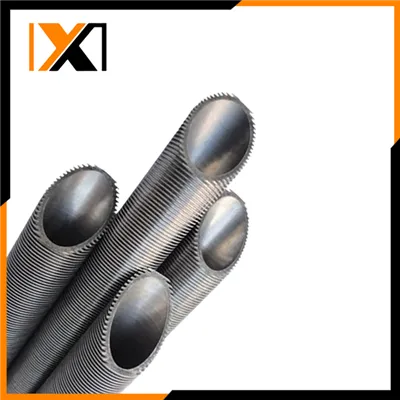
What is the Heat Transfer Efficiency of Titanium Inner Grooved Tubes?
In the realm of heat transfer technology, titanium inner grooved tubes have emerged as a remarkable innovation, offering significant advantages over traditional smooth - walled tubes. As a supplier of titanium inner grooved tubes, I am excited to delve into the details of their heat transfer efficiency and explore why they are becoming the preferred choice in various industries.
Understanding Heat Transfer Basics
Before we discuss the heat transfer efficiency of titanium inner grooved tubes, it is essential to understand the fundamental principles of heat transfer. There are three main modes of heat transfer: conduction, convection, and radiation. In most heat exchanger applications, conduction and convection play the most significant roles.
Conduction is the transfer of heat through a solid material due to a temperature gradient. The rate of conduction depends on the thermal conductivity of the material, the cross - sectional area, the temperature difference, and the distance over which the heat is transferred. Convection, on the other hand, is the transfer of heat between a solid surface and a fluid (liquid or gas) in motion. The heat transfer coefficient in convection is influenced by factors such as fluid velocity, fluid properties, and the geometry of the surface.
How Titanium Inner Grooved Tubes Enhance Heat Transfer
Titanium inner grooved tubes have a unique internal structure with a series of grooves running along the inner surface of the tube. These grooves have a profound impact on both conduction and convection heat transfer mechanisms.
Enhanced Convection
The grooves on the inner surface of the tube disrupt the laminar boundary layer of the fluid flowing inside the tube. In a smooth - walled tube, the fluid near the wall forms a laminar layer with relatively low heat transfer coefficients. However, the grooves in titanium inner grooved tubes create turbulence in the fluid flow. This turbulence brings fresh, high - temperature fluid closer to the tube wall, increasing the contact area between the fluid and the tube wall and enhancing the convective heat transfer coefficient.
As a result, compared to smooth - walled tubes, titanium inner grooved tubes can achieve a much higher rate of heat transfer for the same fluid flow rate and temperature difference. This means that heat exchangers using titanium inner grooved tubes can be more compact and efficient, as they can transfer the same amount of heat with a smaller surface area.
Improved Conduction
Titanium itself is a metal with good thermal conductivity. The inner grooved design also increases the effective heat transfer area within the tube. A larger surface area allows for more heat to be conducted from the fluid to the tube wall, further enhancing the overall heat transfer process.
Factors Affecting the Heat Transfer Efficiency of Titanium Inner Grooved Tubes
Several factors can influence the heat transfer efficiency of titanium inner grooved tubes:
Groove Geometry
The shape, depth, and pitch of the grooves play a crucial role in determining the heat transfer efficiency. Different groove geometries can generate different levels of turbulence in the fluid flow. For example, deeper and narrower grooves may create more intense turbulence, but they also increase the flow resistance, which can lead to higher pumping power requirements. Therefore, an optimal groove geometry needs to be carefully designed to balance the heat transfer enhancement and the pressure drop.
Fluid Properties
The properties of the fluid flowing through the tube, such as its viscosity, density, and thermal conductivity, also affect the heat transfer efficiency. For example, a fluid with a higher thermal conductivity will transfer heat more readily, while a more viscous fluid may require a higher flow rate to achieve the same level of turbulence.
Flow Rate
The flow rate of the fluid is another important factor. Higher flow rates generally increase the convective heat transfer coefficient by creating more turbulence. However, there is a limit to this effect. Beyond a certain flow rate, the increase in heat transfer efficiency may not be proportional to the increase in flow rate, and the energy required to pump the fluid at high rates may become excessive.


Applications of Titanium Inner Grooved Tubes
Due to their high heat transfer efficiency, titanium inner grooved tubes are widely used in various industries:
Refrigeration and Air - Conditioning
In refrigeration and air - conditioning systems, heat exchangers are critical components. Titanium inner grooved tubes can significantly improve the performance of evaporators and condensers. For instance, our Titanium High Performance Evaporating Tube can enhance the evaporation process, allowing for more efficient cooling. Similarly, the Titanium High Performance Condensing Tube can improve the condensation process, reducing the energy consumption of the system.
Power Generation
In power plants, heat exchangers are used to transfer heat between different working fluids. Titanium inner grooved tubes can increase the efficiency of these heat exchangers, leading to higher power generation efficiency and lower operating costs.
Chemical Industry
The chemical industry often requires heat transfer for various processes such as distillation, evaporation, and cooling. Titanium's corrosion resistance makes the inner grooved tubes ideal for handling corrosive chemicals. Our Titanium Corrugated Tube is also a good option in some chemical applications where a different type of inner surface structure is needed to optimize heat transfer.
Comparison with Other Materials
Compared to other materials commonly used in heat exchangers, such as copper and stainless steel, titanium inner grooved tubes offer several advantages:
Corrosion Resistance
Titanium is highly resistant to corrosion, even in harsh environments such as seawater and acidic solutions. This makes titanium inner grooved tubes suitable for applications where corrosion is a major concern, such as in marine and chemical industries. In contrast, copper and stainless steel may corrode over time, leading to reduced heat transfer efficiency and increased maintenance costs.
Lightweight
Titanium has a relatively low density compared to copper and stainless steel. This means that titanium inner grooved tubes are lighter, which can be an advantage in applications where weight is a critical factor, such as in aerospace and automotive industries.
Contact Us for Purchase and Negotiation
If you are looking for high - quality titanium inner grooved tubes with excellent heat transfer efficiency for your specific application, we are here to help. We have a wide range of products and can provide customized solutions according to your requirements. Our team of experts can offer technical support and advice to ensure that you get the most suitable tubes for your heat exchanger systems. Contact us to start the purchase negotiation and take advantage of the benefits that our titanium inner grooved tubes can bring to your business.
References
- Incropera, F. P., & DeWitt, D. P. (2002). Fundamentals of Heat and Mass Transfer. John Wiley & Sons.
- Kakac, S., & Liu, H. (2002). Heat Exchangers: Selection, Rating, and Thermal Design. CRC Press.
- Bergles, A. E. (1997). Augmentation of Single - Phase Convective Heat Transfer. In Heat Exchanger Design Handbook (pp. 5.1 - 5.32). Begell House.