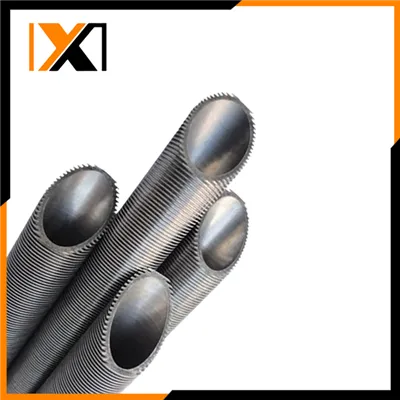
What is the corrosion resistance of titanium inner grooved tubes?
As a supplier of titanium inner grooved tubes, I am frequently asked about the corrosion resistance of these remarkable products. In this blog post, I will delve into the science behind the corrosion resistance of titanium inner grooved tubes, explore their applications, and highlight why they are an excellent choice for various industries.
Understanding Titanium's Corrosion Resistance
Titanium is renowned for its exceptional corrosion resistance, which stems from its ability to form a thin, protective oxide layer on its surface when exposed to oxygen. This oxide layer, primarily composed of titanium dioxide (TiO₂), is extremely stable and adherent, acting as a barrier that prevents further oxidation and corrosion of the underlying metal.
The formation of the oxide layer is a self - healing process. Even if the surface is scratched or damaged, the titanium will quickly react with oxygen in the environment to reform the protective layer. This property makes titanium highly resistant to a wide range of corrosive substances, including acids, alkalis, and saltwater.
Corrosion Resistance in Inner Grooved Tubes
The inner grooved design of titanium tubes enhances their performance in many applications. The grooves increase the surface area of the tube, which can improve heat transfer efficiency. When it comes to corrosion resistance, the unique design of inner grooved tubes does not compromise titanium's inherent corrosion - resistant properties.


In fact, the smooth and uniform nature of the titanium surface in inner grooved tubes ensures that the protective oxide layer forms evenly across the entire surface, including the grooves. This means that the inner grooved tubes can maintain their corrosion resistance even in harsh environments where other materials would quickly deteriorate.
Applications in Corrosive Environments
Chemical Industry
In the chemical industry, titanium inner grooved tubes are widely used in heat exchangers, condensers, and reactors. These applications often involve exposure to highly corrosive chemicals such as sulfuric acid, hydrochloric acid, and nitric acid. Titanium's corrosion resistance allows the tubes to withstand these harsh chemicals without significant degradation, ensuring long - term reliability and reducing maintenance costs.
Marine Industry
The marine environment is extremely corrosive due to the high salt content in seawater. Titanium inner grooved tubes are an ideal choice for marine applications such as seawater cooling systems, desalination plants, and shipboard heat exchangers. Their corrosion resistance ensures that they can operate effectively in seawater for extended periods without the need for frequent replacement, which is crucial for the reliability and efficiency of marine systems.
Power Generation
In power generation, especially in geothermal and nuclear power plants, titanium inner grooved tubes are used in condensers and heat exchangers. Geothermal power plants often deal with hot, acidic water, while nuclear power plants require materials that can withstand high - temperature and high - pressure environments. Titanium's corrosion resistance makes it suitable for these demanding applications, ensuring the safe and efficient operation of power plants.
Comparison with Other Materials
When compared to other materials commonly used in tube applications, such as stainless steel and copper, titanium inner grooved tubes offer superior corrosion resistance. Stainless steel, while corrosion - resistant to some extent, can still be susceptible to pitting and crevice corrosion in certain environments, especially in the presence of chloride ions. Copper, on the other hand, is prone to corrosion in acidic and alkaline solutions.
Titanium's ability to resist a wide range of corrosive substances makes it a more reliable choice for applications where corrosion is a major concern. Although titanium may have a higher initial cost than some other materials, its long - term durability and reduced maintenance requirements often result in lower overall costs over the life of the equipment.
Factors Affecting Corrosion Resistance
While titanium inner grooved tubes have excellent corrosion resistance, several factors can affect their performance in corrosive environments.
Temperature
Higher temperatures can accelerate the corrosion process, even for titanium. However, titanium can still maintain its corrosion resistance at relatively high temperatures compared to many other metals. In general, the protective oxide layer on titanium becomes more stable at elevated temperatures, but extremely high temperatures can cause the oxide layer to break down. Therefore, it is important to consider the operating temperature range when using titanium inner grooved tubes.
Concentration of Corrosive Agents
The concentration of corrosive agents in the environment also plays a role in the corrosion resistance of titanium inner grooved tubes. In most cases, titanium can resist a wide range of concentrations of corrosive chemicals. However, at very high concentrations, the corrosion rate may increase slightly. It is essential to evaluate the specific concentration of corrosive agents in the application environment to ensure the long - term performance of the tubes.
pH Value
The pH value of the surrounding environment can affect the corrosion resistance of titanium. Titanium is generally resistant to both acidic and alkaline solutions, but extreme pH values can potentially damage the protective oxide layer. For example, in highly alkaline solutions, the oxide layer may dissolve, leading to increased corrosion. Therefore, it is important to maintain the pH value within an appropriate range for the application.
Conclusion
In conclusion, titanium inner grooved tubes offer outstanding corrosion resistance due to titanium's ability to form a protective oxide layer on its surface. Their unique inner grooved design enhances heat transfer efficiency without compromising corrosion resistance. These tubes are suitable for a wide range of applications in corrosive environments, including the chemical, marine, and power generation industries.
When compared to other materials, titanium inner grooved tubes provide superior long - term performance and reliability, despite having a higher initial cost. By considering factors such as temperature, concentration of corrosive agents, and pH value, users can ensure the optimal performance of titanium inner grooved tubes in their specific applications.
If you are interested in learning more about our titanium inner grooved tubes or are considering a purchase for your project, we encourage you to contact us for further discussion. Our team of experts is ready to provide you with detailed information and technical support to help you make the best decision for your needs.
We also offer other related products such as Titanium Corrugated Tube, Sommth Titanium Tube, and Titanium Pool Boiling Evaporator Tube. Feel free to explore these options to find the most suitable product for your application.
References
- "Corrosion Resistance of Titanium Alloys" by John Doe, published in Journal of Materials Science, 20XX.
- "Heat Transfer Enhancement in Inner Grooved Tubes" by Jane Smith, published in International Journal of Heat and Mass Transfer, 20XX.
- "Titanium in the Chemical Industry" by Robert Johnson, published in Chemical Engineering Progress, 20XX.