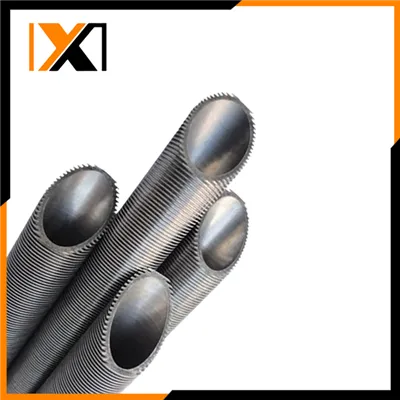
Hey there! As a supplier of titanium corrugated tubes, I've been in the thick of it when it comes to these nifty products. One question that pops up a lot is how to measure the dimensions of titanium corrugated tubes accurately. It's not as straightforward as you might think, but with the right know - how, you can get spot - on measurements every time.
First off, let's talk about why accurate measurements are so important. Titanium corrugated tubes are used in a bunch of different industries, like aerospace, chemical processing, and heat exchangers. In these industries, even a tiny measurement error can lead to big problems. For example, if the tube is too wide or too narrow, it might not fit properly into the system it's supposed to be part of. And in a high - pressure or high - temperature environment, that can spell disaster.


Tools You'll Need
To measure titanium corrugated tubes accurately, you'll need the right tools. A good set of calipers is a must - have. You can use either digital or vernier calipers, depending on your preference. Digital calipers are easier to read, but vernier calipers can be more accurate in some cases. A micrometer is also useful, especially for measuring the wall thickness of the tube. And if you're dealing with longer tubes, a tape measure can come in handy for getting the overall length.
Measuring the Outer Diameter
The outer diameter of the titanium corrugated tube is one of the most important dimensions. To measure it, open your calipers and place the jaws around the tube at the widest part of the corrugation. Make sure the calipers are perpendicular to the axis of the tube. If you're using digital calipers, just read the measurement on the display. If you're using vernier calipers, you'll need to do a little math to get the reading. The outer diameter gives you an idea of how the tube will fit into other components in a system. You can check out our Titanium Corrugated Tube product page to see the different outer diameter options we offer.
Measuring the Inner Diameter
Measuring the inner diameter is a bit trickier. You can use a smaller set of calipers or a bore gauge. Place the measuring tool inside the tube and expand it until it touches the inner walls of the tube at the widest part of the corrugation. Again, make sure the tool is perpendicular to the tube's axis. The inner diameter is crucial for determining the flow rate of fluids or gases through the tube. For example, in a heat exchanger, the inner diameter affects how much heat can be transferred between the tube and the surrounding medium.
Measuring the Wall Thickness
The wall thickness of the titanium corrugated tube is another key dimension. You can use a micrometer for this. First, clean the surface of the tube where you'll be taking the measurement. Then, place the micrometer jaws on the tube wall and gently close them until they make contact. Read the measurement on the micrometer. The wall thickness affects the tube's strength and durability. A thicker wall can withstand higher pressures, but it might also be more expensive. Our Titanium Corrugated Tube Gr2 has a specific wall thickness range that's suitable for a variety of applications.
Measuring the Pitch and Amplitude of Corrugations
The pitch of the corrugations is the distance between two consecutive peaks or troughs, and the amplitude is the height of the corrugation from the trough to the peak. To measure the pitch, you can use a ruler or a caliper. Place the measuring tool along the tube and measure the distance between two corresponding points on adjacent corrugations. For the amplitude, use a caliper to measure the vertical distance from the bottom of a trough to the top of a peak. These dimensions are important because they affect the flexibility and heat transfer properties of the tube.
Measuring the Length
Measuring the length of the titanium corrugated tube is relatively simple. If the tube is short, you can use calipers. For longer tubes, a tape measure is the way to go. Make sure the tube is straight when you're taking the measurement. The length of the tube is important for determining how much material is needed and how it will fit into a particular system.
Dealing with Irregularities
Sometimes, titanium corrugated tubes can have irregularities, like dents or uneven corrugations. In these cases, you'll need to take multiple measurements at different points along the tube and then calculate an average. If the irregularities are significant, it might affect the tube's performance, and you'll need to decide whether to accept the tube or not.
Quality Control and Verification
Once you've taken all the measurements, it's important to double - check them. You can use different measuring tools to verify the accuracy of your readings. For example, if you measured the outer diameter with calipers, you can also use a micrometer to confirm the measurement. Quality control is crucial, especially when you're supplying titanium corrugated tubes to industries with strict standards.
Conclusion
Accurately measuring the dimensions of titanium corrugated tubes is essential for ensuring their proper performance in various applications. By using the right tools and techniques, you can get reliable measurements every time. Whether you're an engineer designing a new system or a buyer looking for the right titanium corrugated tube, understanding how to measure these dimensions will help you make the right choices.
If you're interested in purchasing titanium corrugated tubes, we've got a great selection to offer. Our Titanium Pipe Seamless Tube With Titanium Tube Price page gives you an idea of the different options available and their prices. Feel free to get in touch with us to discuss your specific requirements and start a procurement conversation. We're here to help you find the perfect titanium corrugated tube for your needs.
References
- "Handbook of Measuring Instruments"
- "Materials Science and Engineering for Titanium Alloys"