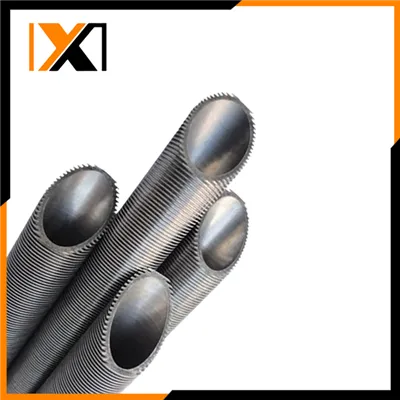
Copper nickel corrugated tubes are widely used in various industries due to their excellent corrosion resistance, thermal conductivity, and mechanical properties. However, in some applications where the tubes are subject to abrasion, such as in fluid - carrying systems with solid particles or high - velocity fluid flow, the abrasion resistance of these tubes becomes a critical concern. As a renowned supplier of copper nickel corrugated tubes, we have in - depth knowledge and rich experience in improving their abrasion resistance. In this blog, I will share some effective methods to enhance the abrasion resistance of copper nickel corrugated tubes.
1. Material Selection and Alloy Optimization
The base material of copper nickel tubes plays a fundamental role in their abrasion resistance. In general, different copper - nickel alloy compositions can have varying degrees of hardness and toughness, which are closely related to abrasion resistance.
1.1 Alloy Composition Adjustment
The most common copper - nickel alloys are Cu - Ni 90/10 and Cu - Ni 70/30. By increasing the nickel content, the hardness and strength of the alloy can be improved. Nickel atoms have a strengthening effect on the copper matrix, which enhances the tube's ability to resist wear. For example, Cu - Ni 70/30 has better abrasion resistance compared to Cu - Ni 90/10 in most cases.
In addition, trace elements can also be added to the alloy. Elements such as iron, manganese, and chromium can be incorporated into the copper - nickel alloy. Iron can form intermetallic compounds with copper and nickel, which disperse in the matrix and improve its hardness. Manganese can enhance the alloy's strength and toughness, and chromium can form a protective oxide film on the surface, reducing the direct contact between the tube surface and abrasive particles.
1.2 Microstructure Control
The microstructure of the copper - nickel alloy also affects its abrasion resistance. Fine - grained microstructures generally offer better abrasion resistance than coarse - grained ones. Through proper heat - treatment processes such as annealing and quenching, the grain size of the alloy can be refined. For instance, a controlled annealing process can promote the recrystallization of the alloy, resulting in a finer and more uniform grain structure. This fine - grained structure can effectively impede the movement of dislocations under abrasion, thereby improving the tube's resistance to wear.
2. Surface Treatment
Surface treatment is an effective way to increase the abrasion resistance of copper nickel corrugated tubes. By modifying the surface properties of the tubes, a protective layer can be formed to reduce the wear caused by friction.
2.1 Coating Application
Applying a wear - resistant coating on the surface of the tube is a common method. There are several types of coatings that can be used, such as ceramic coatings, polymer coatings, and metal coatings.
Ceramic coatings, such as titanium nitride (TiN) and aluminum oxide (Al₂O₃), have high hardness and excellent wear resistance. They can be deposited on the tube surface through physical vapor deposition (PVD) or chemical vapor deposition (CVD) techniques. These coatings form a hard and dense layer that can effectively resist the scratching and cutting action of abrasive particles.
Polymer coatings, on the other hand, can provide a lubricating effect in addition to wear protection. Fluoropolymer coatings, such as polytetrafluoroethylene (PTFE), have low friction coefficients, which can reduce the frictional force between the tube surface and the abrasive medium. This not only reduces wear but also helps to prevent the adhesion of abrasive particles on the tube surface.
Metal coatings, like nickel - based coatings, can improve the tube's abrasion resistance as well. Electroplating is a commonly used method to deposit nickel coatings on the copper - nickel tube surface. The nickel coating can enhance the surface hardness and provide a certain degree of corrosion resistance simultaneously.
2.2 Surface Hardening Treatments
Processes such as nitriding and carburizing can be used to harden the surface of copper nickel tubes. Nitriding involves introducing nitrogen atoms into the tube surface at high temperatures, forming hard nitride compounds. This treatment can significantly increase the surface hardness of the tube, thereby improving its abrasion resistance. Carburizing, which introduces carbon atoms into the surface layer, can also have a similar effect. However, it requires careful control of the process parameters to avoid excessive embrittlement of the surface layer.


3. Design Optimization
The design of the copper nickel corrugated tube itself can also have an impact on its abrasion resistance.
3.1 Corrugation Geometry Design
The shape, pitch, and depth of the corrugations play important roles in abrasion resistance. A well - designed corrugation geometry can reduce the direct impact of abrasive particles on the tube surface. For example, a larger corrugation pitch can provide more space for the abrasive particles to pass through, reducing the contact area between the particles and the tube surface. A reasonable corrugation depth can also enhance the tube's flexibility, which allows it to absorb the impact energy of the abrasive particles without being severely damaged.
3.2 Flow Channel Design
In applications where the tube is used for fluid transportation, the flow channel design inside the tube can affect the abrasion process. A smooth and well - shaped flow channel can reduce the turbulence and eddy currents of the fluid, which in turn reduces the scouring of the tube wall by the fluid - borne abrasive particles. Additionally, using internal baffles or flow guides can help to distribute the fluid flow more evenly, preventing the formation of high - velocity zones that can cause severe abrasion.
4. Operational and Maintenance Considerations
Proper operation and maintenance are also essential for ensuring the long - term abrasion resistance of copper nickel corrugated tubes.
4.1 Fluid Conditions Control
In fluid - related applications, controlling the properties of the fluid is crucial. The concentration, size, and hardness of the solid particles in the fluid should be monitored and regulated. Filtration systems can be installed upstream of the tubes to remove large and hard abrasive particles. In addition, adjusting the flow rate and temperature of the fluid can also affect the abrasion process. A lower flow rate generally reduces the erosive force of the fluid, while an appropriate temperature can prevent the brittle fracture of the tube material.
4.2 Regular Inspection and Maintenance
Regular inspection of the copper nickel corrugated tubes is necessary to detect any signs of abrasion at an early stage. Non - destructive testing methods, such as ultrasonic testing and eddy - current testing, can be used to assess the thickness and integrity of the tube wall. Once abrasion is detected, timely measures such as tube replacement or surface repair can be taken to prevent further deterioration.
We, as a supplier of copper nickel corrugated tubes, offer a wide range of products, including Copper Nickel Pool Boiling Evaporator Tube, Copper Nickel Inner Grooved Tube, and Copper Nickel Ordinary Low Fin Tube. Our products are manufactured with high - quality materials and advanced production techniques, and we can also provide customized solutions according to your specific requirements to improve the abrasion resistance of the tubes.
If you are interested in our products or have any questions about increasing the abrasion resistance of copper nickel corrugated tubes, please feel free to contact us for procurement and technical discussions. We are committed to providing you with the best products and services to meet your industrial needs.
References
[1] Davis, J. R. (Ed.). (2001). Copper and copper alloys. ASM International.
[2] Totten, G. E., & MacKenzie, D. S. (2003). Handbook of aluminum: physical metallurgy and processing. CRC Press.
[3] Bhadeshia, H. K. D. H., & Honeycombe, R. W. K. (2017). Steels: microstructures and properties. Butterworth - Heinemann.