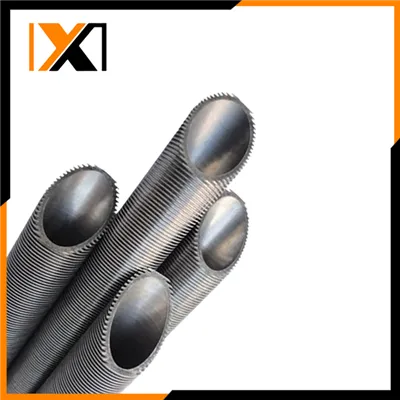
As a supplier of copper corrugated tubes, I've often been asked about how these tubes interact with electromagnetic fields. This question isn't just academic; it has practical implications for various industries where copper corrugated tubes are used. In this blog post, I'll explore the relationship between copper corrugated tubes and electromagnetic fields, drawing on scientific knowledge and real - world applications.
Understanding Copper Corrugated Tubes
Copper corrugated tubes are a unique product in the world of piping. They are made from high - quality copper, which is known for its excellent thermal and electrical conductivity. The corrugated design gives these tubes flexibility, which is highly beneficial in applications where the tube needs to bend or conform to different shapes.
These tubes are widely used in a range of industries, including HVAC (Heating, Ventilation, and Air Conditioning), refrigeration, and plumbing. Their ability to handle high pressures and temperatures makes them suitable for systems that require reliable and efficient fluid transfer. For example, in HVAC systems, copper corrugated tubes are used to carry refrigerants, helping to maintain the proper temperature and humidity levels in buildings.
In addition to the standard copper corrugated tubes, we also offer a variety of related products such as Copper Ordinary Low Fin Tube, Copper Falling Film Evaporator Tube, and Copper Pool Boiling Evaporator Tube. These specialized tubes are designed to meet the specific needs of different applications, enhancing the performance and efficiency of various systems.
Electromagnetic Fields: Basics
Before delving into how copper corrugated tubes are affected by electromagnetic fields, it's important to understand what electromagnetic fields are. Electromagnetic fields are a combination of electric and magnetic fields. They are created by the movement of electric charges.
There are two main types of electromagnetic fields: static and dynamic. Static electromagnetic fields are produced by stationary electric charges or permanent magnets. For example, the magnetic field around a bar magnet is a static magnetic field. Dynamic electromagnetic fields, on the other hand, are generated by changing electric currents. These fields are commonly found in electrical appliances, power lines, and wireless communication devices.
Electromagnetic fields can have different frequencies and intensities. Low - frequency electromagnetic fields are typically associated with power systems, while high - frequency fields are used in communication technologies such as radio, television, and mobile phones.
How Copper Interacts with Electromagnetic Fields
Copper is a highly conductive metal. When it comes to electromagnetic fields, copper has several important properties. First, copper is a good conductor of electricity. This means that when an electromagnetic field interacts with a copper object, it can induce an electric current in the copper. This phenomenon is known as electromagnetic induction.
According to Faraday's law of electromagnetic induction, a changing magnetic field through a conductor will induce an electromotive force (EMF) in the conductor, which in turn causes an electric current to flow. In the case of copper corrugated tubes, if they are exposed to a changing electromagnetic field, an induced current will be generated within the tube.
The magnitude of the induced current depends on several factors, including the strength of the electromagnetic field, the rate of change of the field, and the conductivity of the copper. Since copper has a high conductivity, it can support relatively large induced currents compared to less conductive materials.
Another property of copper in the context of electromagnetic fields is its ability to act as a shield. Copper can absorb and redirect electromagnetic waves, reducing the intensity of the field on the other side of the copper object. This is why copper is often used in electromagnetic shielding applications, such as in electronic devices to protect sensitive components from external electromagnetic interference.
Impact on Copper Corrugated Tubes
When it comes to copper corrugated tubes, the presence of electromagnetic fields can have both positive and negative impacts.
On the positive side, the induced currents in the copper corrugated tubes can be harnessed for certain applications. For example, in some industrial processes, the induced currents can be used to heat the tubes. This is known as induction heating. By applying a high - frequency electromagnetic field to the copper corrugated tubes, the induced currents generate heat within the tubes, which can be used for processes such as soldering or annealing.
However, there are also potential negative impacts. The induced currents can cause power losses in the form of heat dissipation. These power losses can reduce the efficiency of the system in which the copper corrugated tubes are used. In addition, the induced currents can create electromagnetic interference (EMI) in nearby electronic components. This can lead to malfunctions in sensitive equipment, such as control systems or communication devices.
The shape of the corrugated tubes can also affect their interaction with electromagnetic fields. The corrugations can cause the induced currents to flow in more complex patterns compared to a straight tube. This can make it more difficult to predict and control the effects of the electromagnetic fields on the tubes.
Real - World Applications and Considerations
In real - world applications, the impact of electromagnetic fields on copper corrugated tubes needs to be carefully considered. For example, in power distribution systems, where copper corrugated tubes may be used to carry electrical cables, the electromagnetic fields generated by the power lines can induce currents in the tubes. Engineers need to design the system in such a way that the power losses and EMI are minimized.
In the field of electronics, copper corrugated tubes are sometimes used as shielding enclosures for sensitive components. In this case, the tubes are designed to absorb and redirect the electromagnetic fields, protecting the internal components from external interference.
When using copper corrugated tubes in environments with high - intensity electromagnetic fields, it's important to test the tubes to ensure their performance and reliability. This may involve measuring the induced currents, power losses, and EMI levels. Based on the test results, appropriate measures can be taken to optimize the use of the tubes.
Conclusion
In conclusion, copper corrugated tubes are indeed affected by electromagnetic fields. The high conductivity of copper allows for the induction of electric currents when exposed to changing electromagnetic fields. These induced currents can have both positive and negative impacts, depending on the application.
As a supplier of copper corrugated tubes, we understand the importance of providing products that can perform well in different electromagnetic environments. We offer a range of products, including the specialized Copper Ordinary Low Fin Tube, Copper Falling Film Evaporator Tube, and Copper Pool Boiling Evaporator Tube, to meet the diverse needs of our customers.


If you are interested in learning more about our copper corrugated tubes or have specific requirements for your projects, please don't hesitate to contact us for procurement and further discussions. We are committed to providing high - quality products and excellent customer service.
References
- Halliday, D., Resnick, R., & Walker, J. (2014). Fundamentals of Physics. Wiley.
- Griffiths, D. J. (2017). Introduction to Electrodynamics. Cambridge University Press.
- Grover, F. W. (1946). Inductance Calculations: Working Formulas and Tables. Dover Publications.