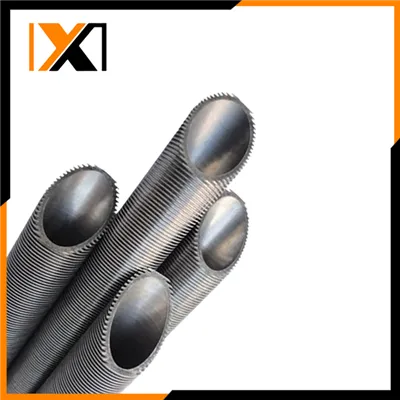
What is the thermal conductivity of copper nickel inner grooved tubes compared to other materials?
As a supplier of copper nickel inner grooved tubes, I am often asked about the thermal conductivity of these tubes and how they stack up against other materials. In this blog post, I will delve into the thermal conductivity of copper nickel inner grooved tubes and make comparisons with various other commonly used materials.
Thermal Conductivity Basics
Thermal conductivity is a fundamental property of a material that describes its ability to conduct heat. It is defined as the quantity of heat transferred, per unit time, through a unit area of a material with a unit thickness, when there is a unit temperature difference across the thickness. The SI unit of thermal conductivity is watts per meter - kelvin (W/(m·K)). A higher thermal conductivity value means that the material can transfer heat more efficiently.
Thermal Conductivity of Copper Nickel Inner Grooved Tubes
Copper nickel alloys, also known as cupronickel, are a group of alloys consisting mainly of copper with nickel as the main alloying element. The most common copper nickel alloys used in tube manufacturing are Cu - 10Ni and Cu - 30Ni. These alloys have a unique combination of properties, including good corrosion resistance, high strength, and relatively good thermal conductivity.
The inner grooved design of copper nickel tubes further enhances their heat transfer performance. The grooves increase the internal surface area of the tube, which promotes better fluid mixing and increases the contact area between the fluid and the tube wall. This leads to an enhanced convective heat transfer coefficient.
The thermal conductivity of copper nickel alloys typically ranges from about 20 to 40 W/(m·K), depending on the specific alloy composition. For example, Cu - 10Ni has a thermal conductivity around 26 W/(m·K), while Cu - 30Ni has a lower thermal conductivity of about 22 W/(m·K) due to the higher nickel content. The inner grooves, although they do not directly affect the intrinsic thermal conductivity of the material, can significantly improve the overall heat transfer performance of the tube.
Comparison with Other Materials
Copper Tubes
Pure copper is well - known for its excellent thermal conductivity, with a value of approximately 401 W/(m·K). This is much higher than that of copper nickel alloys. However, copper has some drawbacks in certain applications. It is more susceptible to corrosion in seawater and some aggressive environments compared to copper nickel alloys. While copper tubes can transfer heat faster at the material level, the long - term performance and durability of copper nickel inner grooved tubes may be more favorable in corrosive conditions.
Stainless Steel Tubes
Stainless steel is another common material used in tube applications. The thermal conductivity of stainless steel is relatively low, typically in the range of 14 - 16 W/(m·K). This is significantly lower than that of copper nickel alloys. In heat transfer applications, stainless steel tubes may require larger surface areas or more complex heat exchanger designs to achieve the same level of heat transfer as copper nickel inner grooved tubes. However, stainless steel has excellent corrosion resistance in many environments, especially in acidic and alkaline solutions.
Aluminum Tubes
Aluminum has a relatively high thermal conductivity, around 205 W/(m·K). It is also lightweight and cost - effective. However, aluminum is more prone to pitting corrosion in chloride - containing environments such as seawater. Copper nickel inner grooved tubes, on the other hand, offer better corrosion resistance in such conditions, making them a more suitable choice for marine and offshore applications where long - term reliability is crucial.
Applications of Copper Nickel Inner Grooved Tubes
The unique combination of thermal conductivity and corrosion resistance of copper nickel inner grooved tubes makes them suitable for a wide range of applications.
Marine Applications
In the marine industry, copper nickel inner grooved tubes are widely used in heat exchangers, condensers, and evaporators. They can withstand the corrosive effects of seawater while providing efficient heat transfer. For example, Copper Nickel Falling Film Evaporator Tube can be used in desalination plants to convert seawater into fresh water. The inner grooved design helps to improve the evaporation efficiency of the falling film, while the copper nickel alloy resists corrosion from the high - salt content of seawater.


Power Generation
In power plants, copper nickel inner grooved tubes are used in condensers to transfer heat from the steam to the cooling water. The good thermal conductivity of the copper nickel alloy and the enhanced heat transfer due to the inner grooves ensure efficient operation of the condenser. Copper Nickel Ordinary Low Fin Tube is often used in these applications, as the low fins further increase the surface area for heat transfer.
Chemical Processing
In the chemical industry, where corrosive chemicals are often present, copper nickel inner grooved tubes can be used in heat exchangers. Their corrosion resistance allows them to handle a wide range of chemicals, while the efficient heat transfer properties help to maintain the desired process temperatures. Copper Nickel Pitted Surface Tube can be used in some specific chemical processes where the pitted surface may provide additional surface area for enhanced chemical reactions and heat transfer.
Why Choose Our Copper Nickel Inner Grooved Tubes
As a supplier of copper nickel inner grooved tubes, we take pride in the quality and performance of our products. We use high - quality copper nickel alloys and advanced manufacturing processes to ensure that our tubes have the best possible thermal conductivity and corrosion resistance. Our inner grooved tubes are carefully designed to maximize heat transfer efficiency, and we can customize the groove geometry according to the specific requirements of our customers.
We also offer comprehensive technical support and after - sales services. Our team of experts can provide you with detailed information about the thermal performance and application suitability of our products. Whether you are in the marine, power generation, or chemical processing industry, we can help you select the most appropriate copper nickel inner grooved tubes for your needs.
Contact Us for Procurement
If you are interested in our copper nickel inner grooved tubes or have any questions about their thermal conductivity and applications, please feel free to contact us. We are always ready to discuss your requirements and provide you with a competitive quote. Our goal is to help you achieve the best heat transfer performance in your applications while ensuring the long - term reliability of your equipment.
References
- Incropera, F. P., & DeWitt, D. P. (2002). Fundamentals of Heat and Mass Transfer. John Wiley & Sons.
- ASM Handbook Committee. (1990). ASM Handbook Volume 2: Properties and Selection: Nonferrous Alloys and Special - Purpose Materials. ASM International.
- Tuck, R. C. (1995). Copper - Nickel Alloys in Marine Engineering. Elsevier Science.