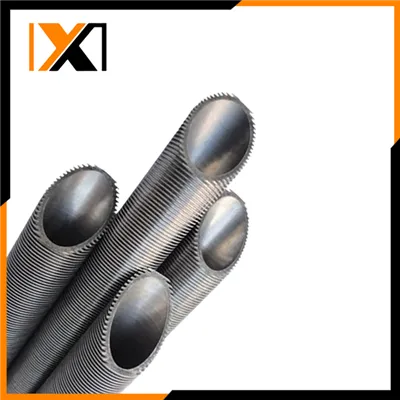
What is the manufacturing process of copper high performance fin tube?
As a trusted supplier of copper high performance fin tubes, I'm excited to share the detailed manufacturing process of these essential components. Copper high performance fin tubes are widely used in various industries such as HVAC, power generation, and chemical processing due to their excellent heat transfer properties and durability.
Raw Material Selection
The first step in the manufacturing process is the careful selection of raw materials. High - quality copper is crucial for producing high - performance fin tubes. We typically use copper alloys with specific chemical compositions that offer optimal thermal conductivity, corrosion resistance, and mechanical strength. For example, some of our popular products like Copper Corrugated Tube C71500 and Copper Ordinary Low Fin Tube C12000 are made from well - chosen copper alloys.
The copper is sourced from reliable suppliers who adhere to strict quality control standards. The raw copper usually comes in the form of billets or coils, which are then inspected for any surface defects, impurities, or dimensional inaccuracies before moving on to the next stage.
Tube Forming
Once the raw copper is selected, the tube forming process begins. There are several methods for forming copper tubes, but the most common ones are extrusion and drawing.
Extrusion: In the extrusion process, the copper billet is heated to a specific temperature, usually around 700 - 800°C, to make it malleable. Then, it is forced through a die using a high - pressure ram. The die determines the outer diameter and wall thickness of the tube. This method is suitable for producing tubes with large diameters and complex cross - sections, such as Copper Square Tube.
Drawing: Drawing is another important tube - forming method. In this process, a tube blank is pulled through a series of dies to reduce its diameter and increase its length. The tube is gradually reduced in size with each pass through the die. Drawing can produce tubes with very precise dimensions and smooth surfaces, which are ideal for high - performance applications.
After the tube is formed, it undergoes a series of finishing operations, including straightening, cutting to the required length, and surface cleaning to remove any scale or debris.
Finning Process
The finning process is what sets high - performance fin tubes apart from ordinary tubes. Fins are added to the outer surface of the tube to increase the heat transfer area, thereby enhancing the heat transfer efficiency. There are several ways to attach fins to the copper tube:
Integral Fins: In this method, the fins are formed directly on the surface of the tube during the manufacturing process. A finning machine uses a set of rotating tools to cut and form the fins on the tube surface. The fins can be of different shapes, such as straight, helical, or serrated, depending on the specific application requirements. Helical fins, for example, can create a swirling flow of the fluid around the tube, which further improves the heat transfer performance.
Welded Fins: Another approach is to weld pre - formed fins onto the tube surface. This method is suitable for adding fins to existing tubes or when using fins made of different materials. The fins are first cut to the appropriate size and shape, and then they are welded to the tube using a welding process such as TIG (Tungsten Inert Gas) welding or laser welding.
The choice of finning method depends on factors such as the tube diameter, fin density, and the application environment. After the finning process, the tubes are inspected for fin integrity, height, and pitch to ensure they meet the quality standards.
Heat Treatment
Heat treatment is an important step in the manufacturing process of copper high - performance fin tubes. It helps to relieve internal stresses generated during the tube forming and finning processes, improve the mechanical properties of the copper, and enhance its corrosion resistance.
The most common heat treatment method for copper tubes is annealing. Annealing involves heating the tubes to a specific temperature, typically between 400 - 700°C, and then slowly cooling them. This process softens the copper, making it more ductile and reducing its hardness. It also helps to recrystallize the copper grains, which improves its overall structure and performance.
Quality Control
Quality control is an integral part of the manufacturing process. At every stage, from raw material selection to the final product, strict quality control measures are implemented.


Dimensional Inspection: The tubes are measured for outer diameter, inner diameter, wall thickness, fin height, fin pitch, and other dimensions using precision measuring instruments such as calipers, micrometers, and coordinate measuring machines (CMMs). Any tubes that do not meet the specified dimensional tolerances are rejected.
Surface Inspection: The surface of the tubes and fins is inspected for any defects such as cracks, scratches, or porosity. Non - destructive testing methods such as ultrasonic testing, eddy - current testing, and dye penetrant testing are used to detect internal and surface defects.
Performance Testing: The heat transfer performance of the fin tubes is tested in a laboratory environment. The tubes are subjected to simulated operating conditions, and the heat transfer coefficient, pressure drop, and other performance parameters are measured. Only tubes that meet the required performance criteria are approved for shipment.
Packaging and Shipping
Once the tubes pass all the quality control tests, they are carefully packaged to prevent damage during transportation. The tubes are usually wrapped in protective materials such as plastic film or paper, and then placed in wooden crates or steel drums.
The packaging is designed to ensure that the tubes are well - protected from moisture, dust, and mechanical impacts. Shipping is arranged according to the customer's requirements, and the tubes are delivered to the destination in a timely and efficient manner.
Conclusion
The manufacturing process of copper high - performance fin tubes is a complex and multi - step procedure that requires strict quality control and advanced manufacturing techniques. From raw material selection to the final product, every stage is crucial in ensuring the high quality and performance of the tubes.
As a supplier, we are committed to providing our customers with the best - quality copper high - performance fin tubes. If you are interested in our products or have any questions about the manufacturing process, please feel free to contact us for procurement and further discussions. We look forward to serving you and meeting your specific requirements.
References
- ASM Handbook Volume 2: Properties and Selection: Nonferrous Alloys and Special - Purpose Materials.
- Tubes in Heat Exchangers: Design, Materials, and Manufacturing, by John P. Holman.
- Copper and Copper Alloys Handbook, edited by George E. Totten.