

Stainless steel is a versatile and widely used material in various industries due to its excellent corrosion resistance, strength, and aesthetic appeal. One of the key processes that significantly affects the properties and performance of stainless steel products is the cold - working process. As a stainless steel supplier, I am here to share with you in - depth knowledge about what the cold - working process of stainless steel is and its implications.
Understanding Cold - Working
Cold - working is a metalworking process in which stainless steel is deformed at room temperature or slightly above it. Unlike hot - working, which is carried out at elevated temperatures, cold - working does not involve heating the metal to a point where recrystallization occurs. The main methods of cold - working stainless steel include rolling, drawing, bending, and stamping.
Rolling
Rolling is a common cold - working method. In this process, stainless steel is passed through a set of rollers to reduce its thickness or change its cross - sectional shape. For example, a thick stainless steel plate can be rolled into a thinner sheet. Cold - rolled stainless steel sheets have a smoother surface finish compared to hot - rolled ones. The rolling process also increases the strength and hardness of the stainless steel. As the material is compressed between the rollers, the grains within the metal are elongated and deformed, resulting in a more refined and stronger microstructure.
Drawing
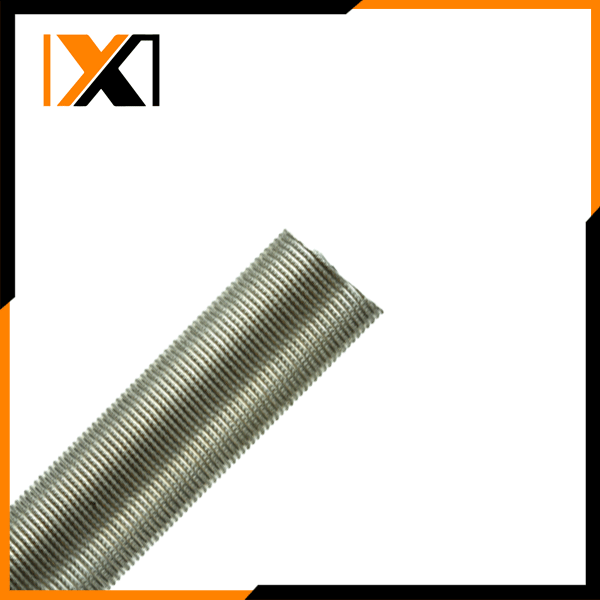
Drawing is another important cold - working technique. It involves pulling a stainless steel rod or tube through a die to reduce its diameter and increase its length. This process is often used to produce thin - walled tubes and wires. For instance, Stainless Steel Inner Grooved Tube can be manufactured using the drawing process. The inner grooves are formed during the drawing operation, which can enhance the heat transfer efficiency of the tube when used in applications such as heat exchangers.
Bending
Bending is used to shape stainless steel into various forms, such as angles, curves, and coils. In the cold - bending process, force is applied to the stainless steel at room temperature to change its shape. This is commonly used in the fabrication of architectural components, like handrails and decorative elements. Cold - bent stainless steel retains its original material properties to a large extent, and the bending process can be precisely controlled to achieve the desired shape and dimensions.
Stamping
Stamping is a process where a stainless steel sheet is placed between a die and a punch. The punch applies pressure to the sheet, cutting or forming it into a specific shape. Stamping is widely used in the production of small - to - medium - sized parts, such as washers, brackets, and automotive components. Cold - stamped stainless steel parts have high precision and good surface quality.
Effects of Cold - Working on Stainless Steel Properties
Mechanical Properties
One of the most significant effects of cold - working on stainless steel is the improvement of mechanical properties. Cold - worked stainless steel has higher strength and hardness compared to its annealed state. The deformation during cold - working creates dislocations within the crystal lattice of the metal. These dislocations interact with each other and impede the movement of atoms, making it more difficult for the material to deform. As a result, the yield strength and ultimate tensile strength of the stainless steel increase. However, the ductility of the material decreases with increasing cold - work. Ductility refers to the ability of a material to deform plastically before fracturing. So, while cold - worked stainless steel is stronger, it is also more brittle than its non - cold - worked counterpart.
Corrosion Resistance
The effect of cold - working on the corrosion resistance of stainless steel is complex. In general, mild cold - working has little to no negative impact on the corrosion resistance of stainless steel. In fact, in some cases, it can even improve the corrosion resistance. The cold - working process can refine the grain structure of the stainless steel, which may enhance the formation of a protective passive film on the surface. However, excessive cold - working can cause residual stresses in the material. These residual stresses can lead to stress - corrosion cracking, especially in environments containing chloride ions or other corrosive agents. Therefore, it is important to control the degree of cold - work and, in some cases, perform stress - relief annealing after cold - working to minimize the risk of stress - corrosion cracking.
Magnetic Properties
The magnetic properties of stainless steel can also be affected by cold - working. Austenitic stainless steels, which are typically non - magnetic in their annealed state, can become slightly magnetic after cold - working. This is because the cold - working process can induce a phase transformation from the austenitic phase to the martensitic phase in some austenitic stainless steels. Martensite is a magnetic phase, so the presence of martensite in the cold - worked stainless steel makes it magnetic.
Applications of Cold - Worked Stainless Steel
Cold - worked stainless steel is used in a wide range of applications across different industries.
Construction Industry
In the construction industry, cold - worked stainless steel is used for structural components, such as beams and columns, as well as for architectural features. The high strength and good corrosion resistance of cold - worked stainless steel make it suitable for use in harsh environments, such as coastal areas. For example, cold - bent stainless steel handrails are commonly used in buildings and bridges due to their durability and aesthetic appeal.
Automotive Industry
The automotive industry uses cold - worked stainless steel for various parts, including exhaust systems, engine components, and decorative trim. The strength and heat resistance of cold - worked stainless steel make it ideal for exhaust systems, which are exposed to high temperatures and corrosive gases. Cold - stamped stainless steel parts are also used in the interior and exterior of vehicles to provide a high - quality finish.
Food and Beverage Industry
In the food and beverage industry, cold - worked stainless steel is used for equipment such as tanks, pipes, and processing machinery. The corrosion resistance and hygienic properties of stainless steel make it a preferred material for handling food and beverages. Cold - drawn Stainless Steel Hemp Tube can be used in the production of beverage dispensing systems, ensuring the purity and quality of the product.
Energy Industry
The energy industry, especially in power generation and oil and gas, relies on cold - worked stainless steel. For example, Stainless Steel High Performance Condensing Tube is used in condensers of power plants. The cold - working process can improve the heat transfer efficiency and mechanical strength of these tubes, which are crucial for the efficient operation of power generation systems.
Quality Control in Cold - Working
As a stainless steel supplier, quality control is of utmost importance in the cold - working process. We ensure that the raw materials used are of high quality and meet the required specifications. During the cold - working process, we closely monitor the process parameters, such as the amount of deformation, the speed of the operation, and the temperature. Non - destructive testing methods, such as ultrasonic testing and magnetic particle testing, are used to detect any internal defects or cracks in the cold - worked stainless steel products. After cold - working, we also perform heat treatment, such as stress - relief annealing, if necessary, to improve the material properties and reduce the risk of stress - corrosion cracking.

Conclusion
The cold - working process is a vital part of the stainless steel manufacturing process. It offers numerous benefits, including improved strength, hardness, and surface finish, as well as the ability to produce complex shapes. However, it also has some potential drawbacks, such as reduced ductility and the risk of stress - corrosion cracking. As a stainless steel supplier, we are committed to providing high - quality cold - worked stainless steel products that meet the diverse needs of our customers. Whether you are in the construction, automotive, food and beverage, or energy industry, we have the right cold - worked stainless steel solutions for you.
If you are interested in purchasing cold - worked stainless steel products or have any questions about our offerings, please feel free to contact us for a procurement discussion. We look forward to working with you to meet your stainless steel requirements.
References
- ASM Handbook, Volume 6: Welding, Brazing, and Soldering, ASM International.
- Metals Handbook Desk Edition, 3rd Edition, ASM International.
- Stainless Steel: A Technical Guide, The Nickel Institute.




