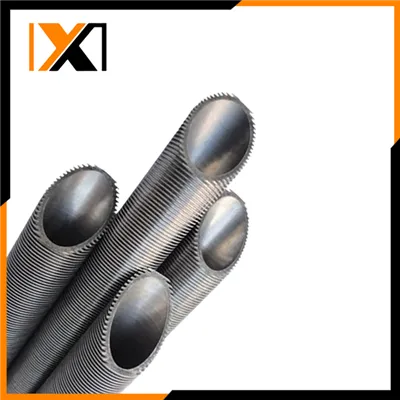
In the aerospace industry, where reliability and performance are non - negotiable, copper nickel corrugated tubes play a crucial role. As a supplier of copper nickel corrugated tubes, I have witnessed firsthand the stringent requirements these components must meet to be suitable for aerospace applications.
1. Material Composition and Purity
The base materials of copper nickel corrugated tubes used in aerospace are typically copper - nickel alloys, such as the well - known C70600 (90Cu - 10Ni) and C71500 (70Cu - 30Ni). These alloys are carefully formulated to achieve a balance of properties. For example, nickel enhances the tube's resistance to corrosion, especially in harsh aerospace environments where exposure to moisture, salt, and various chemicals is common.
The purity of the alloy is of utmost importance. Even trace amounts of impurities can significantly affect the tube's mechanical and chemical properties. For instance, sulfur impurities can cause embrittlement, reducing the tube's ability to withstand stress and vibration. Therefore, aerospace - grade copper nickel corrugated tubes must be refined to a high degree of purity, with strict limits on the content of elements like sulfur, phosphorus, and lead.
2. Mechanical Properties
Strength and Ductility
Aerospace applications subject copper nickel corrugated tubes to a wide range of mechanical stresses. These tubes must have sufficient tensile strength to withstand the forces exerted during take - off, flight, and landing. At the same time, they need to be ductile enough to bend and deform without cracking. This is particularly important in areas where the tubes need to be routed around complex structures within the aircraft.
For example, during a high - G maneuver, the tubes may experience significant stress. If the tube lacks the appropriate strength, it could rupture, leading to system failures. On the other hand, if it is not ductile enough, it may crack when bent to fit into the limited space available in the aircraft's engine compartment or avionics bay.


Fatigue Resistance
The constant vibration and cyclic loading experienced by aircraft components require copper nickel corrugated tubes to have excellent fatigue resistance. Fatigue failure can occur over time due to repeated stress cycles, even if the stress levels are below the tube's ultimate tensile strength. To ensure long - term reliability, aerospace - grade tubes are designed and manufactured to withstand a large number of stress cycles without failure.
Manufacturers often conduct extensive fatigue testing on these tubes, simulating the actual operating conditions of the aircraft. This involves subjecting the tubes to thousands or even millions of stress cycles at various frequencies and amplitudes to determine their fatigue life.
3. Corrosion Resistance
The aerospace environment is harsh, with exposure to moisture, salt spray (especially in coastal operations), and various chemicals. Copper nickel alloys are known for their excellent corrosion resistance, but in aerospace applications, the requirements are even more demanding.
The tubes must be able to resist general corrosion, pitting corrosion, and crevice corrosion. General corrosion can lead to a reduction in the tube's wall thickness over time, weakening its structure. Pitting corrosion can cause localized damage, which may eventually lead to tube failure. Crevice corrosion can occur in areas where there are gaps or tight spaces, such as at the joints between the tube and other components.
To enhance corrosion resistance, aerospace - grade copper nickel corrugated tubes may undergo special surface treatments. For example, a passivation process can be used to create a protective oxide layer on the tube's surface, which helps to prevent corrosion.
4. Dimensional Accuracy
In aerospace applications, dimensional accuracy is critical. Copper nickel corrugated tubes must have precise outer and inner diameters, wall thicknesses, and corrugation dimensions. Any deviation from the specified dimensions can lead to problems during installation and operation.
For example, if the outer diameter of the tube is too large, it may not fit properly into the connectors or mounting brackets. If the wall thickness is inconsistent, it can affect the tube's strength and pressure - bearing capacity. The corrugation pitch and depth also need to be accurately controlled to ensure proper flexibility and flow characteristics.
Advanced manufacturing techniques, such as precision extrusion and forming processes, are used to achieve the required dimensional accuracy. In addition, strict quality control measures are in place during the manufacturing process, including in - process inspections and final product testing using high - precision measuring instruments.
5. Thermal Performance
Aerospace systems often operate in extreme temperature environments. Copper nickel corrugated tubes need to have good thermal conductivity to transfer heat effectively. This is important in applications such as heat exchangers, where the tubes are used to transfer heat between different fluids.
At the same time, the tubes must be able to withstand high - temperature gradients without significant deformation or loss of mechanical properties. For example, in the engine compartment, the tubes may be exposed to high - temperature exhaust gases on one side and relatively cool air on the other. The tube's ability to maintain its integrity under these conditions is crucial for the overall performance of the system.
6. Compliance with Standards and Regulations
Aerospace applications are highly regulated, and copper nickel corrugated tubes must comply with a variety of international and industry - specific standards. These standards cover aspects such as material quality, mechanical properties, corrosion resistance, and manufacturing processes.
For example, the tubes may need to meet the requirements of the Federal Aviation Administration (FAA) in the United States or the European Union Aviation Safety Agency (EASA). In addition, they may need to comply with industry standards such as those set by the Society of Automotive Engineers (SAE).
Compliance with these standards is verified through a series of tests and inspections. Manufacturers must provide detailed documentation, including material certificates, test reports, and quality control records, to demonstrate that their products meet the required standards.
7. Our Product Offerings
As a supplier of copper nickel corrugated tubes, we understand the strict requirements of aerospace applications. Our products are manufactured using the highest - quality materials and advanced manufacturing processes to ensure they meet or exceed the industry's standards.
We offer a wide range of copper nickel corrugated tubes, including Copper Nickel Inner Grooved Tube, which is designed to enhance heat transfer efficiency. Our Copper Nickel Pool Boiling Evaporator Tube is suitable for applications where efficient evaporation is required. And our Nickel Condenser Tubes C71500 are known for their excellent corrosion resistance and mechanical properties.
8. Conclusion
The strict requirements for copper nickel corrugated tubes in aerospace applications are driven by the need for reliability, performance, and safety. From material composition and mechanical properties to dimensional accuracy and thermal performance, every aspect of these tubes is carefully controlled to ensure they can withstand the harsh aerospace environment.
If you are in the aerospace industry and are looking for high - quality copper nickel corrugated tubes, we invite you to contact us for a detailed discussion about your specific requirements. Our team of experts is ready to provide you with the best solutions and support to meet your needs.
References
- "Aerospace Materials Handbook" - Published by an industry - recognized organization, providing comprehensive information on materials used in aerospace applications.
- Technical papers on copper nickel alloys in aerospace, available from academic databases and industry conferences.
- Standards and regulations documents from FAA, EASA, and SAE.