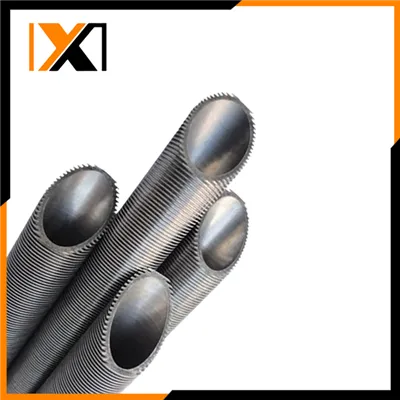
Titanium ordinary low fin tubes are innovative heat transfer components that have gained significant popularity in various industrial applications. As a supplier of these tubes, I am excited to share insights into how they work and their benefits.
Structure and Basic Principle
Titanium ordinary low fin tubes are made from high - quality titanium, a metal known for its excellent corrosion resistance, high strength - to - weight ratio, and good thermal conductivity. The tube has a smooth inner surface and a finned outer surface. The fins are typically low in height compared to some other finned tube designs, usually with a fin height ranging from a few millimeters.
The basic principle behind the operation of titanium ordinary low fin tubes lies in enhancing the heat transfer process. Heat transfer occurs through three main mechanisms: conduction, convection, and radiation. In most industrial heat transfer applications involving these tubes, conduction and convection play the most significant roles.
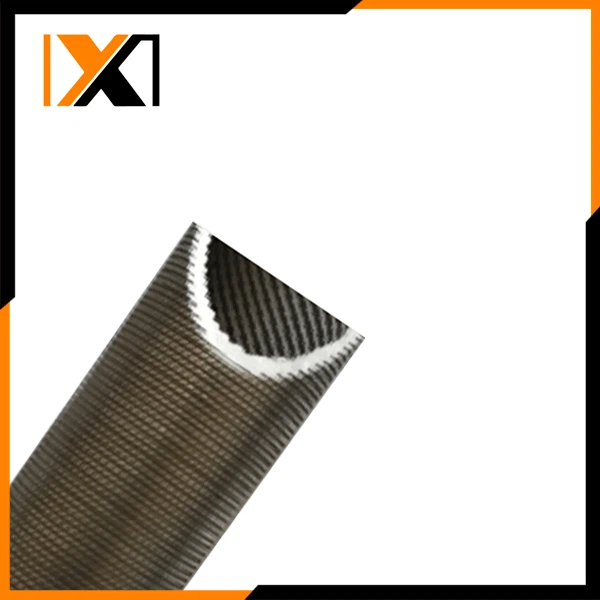
When a hot fluid flows inside the tube, heat is conducted through the titanium tube wall. The fins on the outer surface of the tube increase the surface area available for heat transfer. According to the heat transfer equation (Q = hA\Delta T), where (Q) is the heat transfer rate, (h) is the heat transfer coefficient, (A) is the surface area, and (\Delta T) is the temperature difference between the hot and cold fluids. By increasing the surface area (A) with the fins, the overall heat transfer rate (Q) can be significantly improved, even if the heat transfer coefficient (h) remains relatively constant.
Working in Different Heat Transfer Processes
Evaporation Process
In an evaporation process, such as in a Titanium High Performance Evaporating Tube, the hot fluid inside the tube transfers heat to a liquid on the outside of the tube. The liquid then evaporates, absorbing the latent heat of vaporization. The fins on the titanium ordinary low fin tube increase the contact area between the tube surface and the liquid, promoting more efficient evaporation.
As the liquid comes into contact with the finned surface, the increased surface area allows for more liquid to be in contact with the heated tube at any given time. This leads to a higher rate of heat transfer from the tube to the liquid, causing more rapid evaporation. Additionally, the fins can also enhance the flow of the liquid around the tube, improving the convective heat transfer coefficient. This combination of increased surface area and improved fluid flow results in a more efficient evaporation process.
Condensation Process
During condensation, a vapor on the outside of the tube releases its latent heat as it condenses into a liquid. The titanium ordinary low fin tube again plays a crucial role in enhancing this process. The fins provide additional sites for the vapor to condense. As the vapor comes into contact with the cool finned surface, it forms small droplets. The shape and arrangement of the fins can help to direct the flow of the condensed liquid, preventing it from forming a thick film that would impede further heat transfer.
The enhanced surface area of the fins allows for more vapor to be in contact with the cold surface, increasing the rate of condensation. Moreover, the efficient removal of the condensed liquid from the finned surface ensures that new vapor can continuously come into contact with the tube, maintaining a high rate of heat transfer.
Pool Boiling
In a Titanium Pool Boiling Evaporator Tube application, the tube is immersed in a pool of liquid. The heat from the fluid inside the tube causes the liquid in the pool to boil. The fins on the tube create nucleation sites for bubble formation. Nucleation is the initial stage of bubble formation during boiling. The irregularities and increased surface area provided by the fins make it easier for bubbles to form.

Once the bubbles are formed, they rise through the liquid, carrying heat away from the tube surface. The fins also help to break up the boundary layer of the liquid near the tube surface. The boundary layer is a thin layer of liquid where the flow is relatively stagnant, and it can act as a resistance to heat transfer. By disrupting this boundary layer, the fins improve the convective heat transfer between the tube and the liquid in the pool.
Advantages of Titanium Ordinary Low Fin Tubes
Corrosion Resistance
Titanium is highly resistant to corrosion in a wide range of environments, including seawater, acidic solutions, and alkaline solutions. This makes titanium ordinary low fin tubes ideal for use in industries such as chemical processing, desalination plants, and marine applications. In these industries, the tubes are often exposed to corrosive substances, and the corrosion - resistant property of titanium ensures a long service life and reduces the need for frequent replacement.
High Thermal Conductivity
Although not as high as some metals like copper, titanium still has a relatively good thermal conductivity. This, combined with the enhanced surface area provided by the fins, allows for efficient heat transfer. The high thermal conductivity ensures that heat can be quickly transferred from the hot fluid inside the tube to the outer surface, where it can be further transferred to the surrounding medium.
Lightweight
Titanium has a low density compared to many other metals used in heat transfer applications. This makes the tubes lightweight, which is advantageous in applications where weight is a concern, such as in aerospace and some mobile heat transfer systems. The lightweight nature of the tubes also reduces the structural requirements for supporting them, potentially saving on installation costs.
Applications
Titanium ordinary low fin tubes are used in a variety of industries. In the chemical industry, they are used in heat exchangers for processes such as distillation, evaporation, and condensation. The corrosion resistance of titanium ensures that the tubes can withstand the harsh chemical environments often encountered in these processes.
In the power generation industry, these tubes can be used in condensers and boilers. In condensers, they help to convert steam back into water by transferring heat to a cooling medium. In boilers, they can be used to transfer heat from the combustion gases to the water, generating steam for power generation.
The Titanium Pipe Seamless Tube With Titanium Tube Price is also a related product that can be used in similar applications. Seamless tubes offer additional advantages in terms of strength and reliability, especially in high - pressure applications.
Conclusion
Titanium ordinary low fin tubes are a highly effective solution for enhancing heat transfer in various industrial applications. Their unique combination of corrosion resistance, high thermal conductivity, and enhanced surface area makes them a preferred choice in many industries. Whether it is in evaporation, condensation, or pool boiling processes, these tubes can significantly improve the efficiency of heat transfer operations.
If you are interested in learning more about our titanium ordinary low fin tubes or have a specific heat transfer application in mind, we invite you to contact us for further discussion. Our team of experts is ready to assist you in selecting the most suitable products for your needs and can provide detailed technical information and pricing. We look forward to the opportunity to work with you and contribute to the success of your projects.
References
- Incropera, F. P., & DeWitt, D. P. (2002). Fundamentals of Heat and Mass Transfer. John Wiley & Sons.
- Bergman, T. L., Lavine, A. S., Incropera, F. P., & DeWitt, D. P. (2011). Introduction to Heat Transfer. John Wiley & Sons.