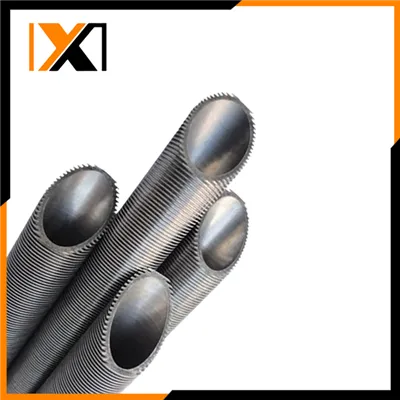
Cyclic loading is a common phenomenon in many engineering applications, and understanding how it affects smooth titanium tubes is crucial for various industries. As a supplier of Sommth Titanium Tube, I've seen firsthand the importance of this knowledge. In this blog, I'll share some insights into how cyclic loading impacts these tubes.
What is Cyclic Loading?
Cyclic loading refers to the repeated application of a load on a material. This can happen in many real - world scenarios. For example, in aerospace applications, the pressure changes inside a titanium tube during flight can cause cyclic loading. In the automotive industry, vibrations from the engine can subject the tubes to cyclic forces.
When a smooth titanium tube is under cyclic loading, the stress on the tube alternates between different levels. This alternating stress can lead to a variety of effects on the tube's structure and performance.
Effects on Material Fatigue
One of the most significant impacts of cyclic loading on smooth titanium tubes is material fatigue. Fatigue occurs when a material fails under repeated loading, even if the stress levels are below the material's ultimate strength.
Titanium is known for its high strength - to - weight ratio and good corrosion resistance. However, under cyclic loading, microscopic cracks can start to form on the surface of the tube. These cracks initiate at stress concentration points, such as small surface defects or areas with residual stress. As the cyclic loading continues, these cracks grow over time. Eventually, the cracks can reach a critical size, and the tube will fracture.
The rate of crack growth depends on several factors. The amplitude of the cyclic stress is a key factor. Higher stress amplitudes generally lead to faster crack growth. The frequency of the cyclic loading also matters. In some cases, higher frequencies can cause more rapid crack propagation, while in others, the interaction between the loading frequency and the material's internal structure can be more complex.
Changes in Mechanical Properties
Cyclic loading can also cause changes in the mechanical properties of smooth titanium tubes. The repeated stress can lead to work hardening in the material. Work hardening is a process where the material becomes stronger and more brittle as it is deformed.
In the initial stages of cyclic loading, the tube may become slightly stronger due to work hardening. However, as the loading continues and cracks start to form, the overall ductility of the tube decreases. This means that the tube becomes less able to deform plastically before failure.
Another aspect is the change in the tube's modulus of elasticity. The modulus of elasticity, which measures the stiffness of the material, can be affected by cyclic loading. In some cases, the repeated stress can cause a slight decrease in the modulus of elasticity, making the tube more flexible than it was originally.
Impact on Corrosion Resistance
The corrosion resistance of smooth titanium tubes can also be influenced by cyclic loading. Titanium has a natural oxide layer on its surface that provides excellent corrosion protection. However, cyclic loading can damage this oxide layer.
When the tube is under cyclic stress, the repeated deformation can cause the oxide layer to crack. Once the oxide layer is damaged, the underlying titanium is exposed to the corrosive environment. This can lead to an increase in the corrosion rate of the tube.
In addition, the presence of cracks due to cyclic loading can act as sites for corrosion to initiate. Corrosion products can accumulate inside the cracks, which can further accelerate the crack growth and eventually lead to the failure of the tube.
Applications and Mitigation Strategies
Given these effects, it's important to consider cyclic loading in the design and application of smooth titanium tubes. In applications such as Titanium Corrugated Tube and Titanium Pool Boiling Evaporator Tube, where cyclic loading may occur, proper design and maintenance are essential.
One mitigation strategy is to reduce stress concentration points. This can be done by improving the surface finish of the tube to minimize surface defects. Heat treatment can also be used to relieve residual stress in the tube, reducing the likelihood of crack initiation.
Another approach is to use appropriate coatings on the tube. Coatings can provide an additional layer of protection against corrosion and can also help to reduce the impact of cyclic loading on the tube's surface.


Conclusion
As a supplier of smooth titanium tubes, I understand the importance of dealing with the effects of cyclic loading. By being aware of the potential issues such as material fatigue, changes in mechanical properties, and reduced corrosion resistance, we can work with our customers to ensure that the tubes are used in the most appropriate way.
If you're in the market for high - quality smooth titanium tubes or have questions about how to deal with cyclic loading in your applications, I encourage you to reach out for a procurement discussion. We can provide more detailed information and help you find the best solutions for your specific needs.
References
-ASM Handbook Volume 19: Fatigue and Fracture. ASM International.
-Shigley's Mechanical Engineering Design. Richard Budynas and Keith Nisbett.
-Titanium: A Technical Guide. John C. Williams.