

Hey there! As a supplier of titanium corrugated tubes, I often get asked about all sorts of technical details. One question that pops up quite a bit is, "What is the Poisson's ratio of titanium corrugated tubes?" Let's dive into this topic and break it down in a way that's easy to understand.
First off, let's talk about what Poisson's ratio actually is. In simple terms, Poisson's ratio is a measure of how a material responds to being stretched or compressed. When you pull on a material in one direction, it usually gets thinner in the perpendicular directions. Poisson's ratio quantifies this relationship. It's defined as the negative ratio of the transverse strain (the change in thickness) to the axial strain (the change in length).
Now, when it comes to titanium corrugated tubes, things get a bit more interesting. Titanium is a fantastic material known for its high strength, low density, and excellent corrosion resistance. These properties make it a popular choice for a wide range of applications, from aerospace to chemical processing.
The corrugated shape of the tubes adds another layer of complexity. The corrugations can affect how the tube behaves under stress, which in turn can influence the Poisson's ratio. Unlike a solid titanium rod or a flat titanium sheet, a corrugated tube has a more intricate internal structure that can cause it to deform in unique ways.
So, what's the Poisson's ratio of titanium corrugated tubes? Well, it's not a straightforward answer. The Poisson's ratio of titanium itself typically ranges from about 0.32 to 0.34. However, the corrugated design can cause this value to deviate from the standard range for solid titanium.
The exact Poisson's ratio of a titanium corrugated tube depends on several factors. One of the most important factors is the geometry of the corrugations. The depth, pitch, and shape of the corrugations can all have a significant impact on how the tube deforms under stress. For example, a tube with deeper corrugations might have a different Poisson's ratio compared to a tube with shallower corrugations.
Another factor is the manufacturing process. The way the corrugated tubes are made can affect their internal structure and mechanical properties. For instance, tubes that are formed by cold working might have different Poisson's ratios compared to those that are formed by hot working.
The application of the tube also plays a role. If the tube is being used in a high-pressure environment, it might experience different stress levels and deformation patterns compared to a tube used in a low-pressure application. This can lead to variations in the Poisson's ratio.
To accurately determine the Poisson's ratio of a specific titanium corrugated tube, you would need to conduct mechanical testing. This typically involves applying a known load to the tube and measuring the resulting deformation in both the axial and transverse directions. By analyzing these measurements, you can calculate the Poisson's ratio.
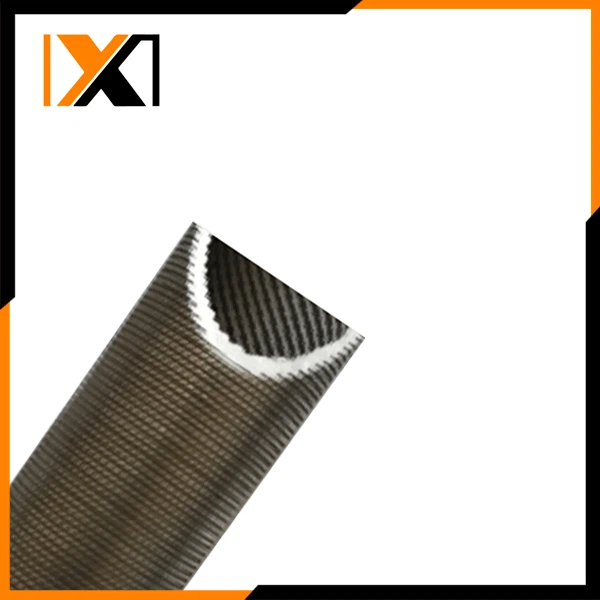

As a supplier, we understand the importance of providing accurate technical information to our customers. That's why we work closely with our manufacturing partners to ensure that our titanium corrugated tubes meet the highest quality standards. We also conduct regular testing to verify the mechanical properties of our products, including the Poisson's ratio.
In addition to titanium corrugated tubes, we also offer a range of other titanium tubes, such as Titanium Inner Grooved Tube, Titanium High Performance Evaporating Tube, and Titanium Pool Boiling Evaporator Tube. These tubes are designed for specific applications and offer unique performance characteristics.
Whether you're in the aerospace industry, the chemical processing industry, or any other field that requires high-quality titanium tubes, we've got you covered. Our team of experts is always available to answer your questions and help you find the right product for your needs.
If you're interested in learning more about our titanium corrugated tubes or any of our other products, don't hesitate to reach out. We're here to assist you with your procurement process and ensure that you get the best possible solution for your application. Contact us today to start the conversation and let's work together to find the perfect titanium tubes for your project.
References
- Callister, W. D., & Rethwisch, D. G. (2017). Materials Science and Engineering: An Introduction. Wiley.
- Ashby, M. F., & Jones, D. R. H. (2012). Engineering Materials 1: An Introduction to Properties, Applications, and Design. Butterworth-Heinemann.
