

In the realm of heat transfer technology, copper high performance fin tubes have emerged as a pivotal component, especially in laminar flow scenarios. As a supplier of these advanced fin tubes, I am deeply involved in understanding and optimizing their heat transfer performance. This blog post aims to explore the intricacies of how copper high performance fin tubes function in laminar flow, highlighting their advantages and potential applications.
Understanding Laminar Flow
Laminar flow is a type of fluid flow in which the fluid travels smoothly in parallel layers, with little to no mixing between the layers. In contrast to turbulent flow, where the fluid particles move in a chaotic and irregular manner, laminar flow is characterized by its ordered and predictable nature. This type of flow typically occurs at low velocities and in systems with small cross - sectional areas or high viscosity fluids.
In heat transfer applications, laminar flow has its own set of challenges and opportunities. The lack of mixing in laminar flow means that heat transfer primarily occurs through conduction within the fluid layers. This can result in lower heat transfer coefficients compared to turbulent flow, where the chaotic motion enhances the mixing of hot and cold fluid regions, facilitating more efficient heat transfer.
Heat Transfer Mechanisms in Copper High Performance Fin Tubes
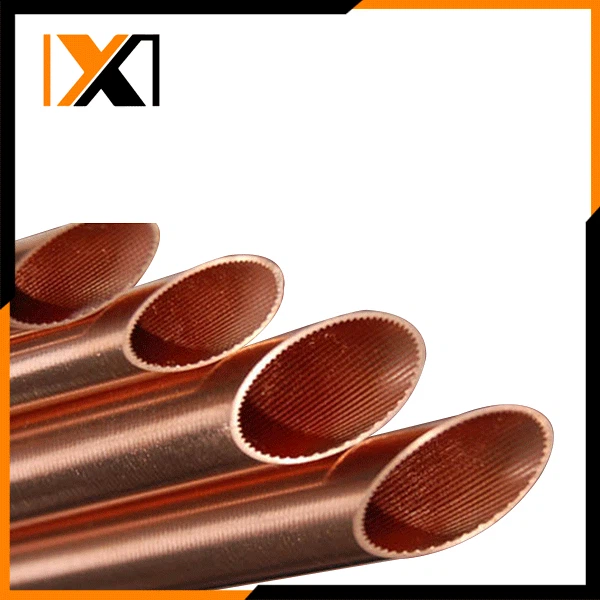
Copper high performance fin tubes are designed to enhance heat transfer by increasing the surface area available for heat exchange. The fins, which are typically made of copper due to its excellent thermal conductivity, protrude from the outer surface of the tube. When a fluid flows in a laminar regime around these finned tubes, several heat transfer mechanisms come into play.
Conduction
Copper is renowned for its high thermal conductivity. Heat is conducted through the tube wall from the hot fluid inside the tube to the base of the fins. The fins then conduct the heat further outwards, increasing the effective surface area through which heat can be transferred to the surrounding fluid. The high thermal conductivity of copper ensures that heat is quickly transferred along the length and width of the fins, minimizing temperature gradients within the fin structure.
Convection
Convection is the transfer of heat between a solid surface and a fluid in motion. In the case of copper high performance fin tubes in laminar flow, the fluid flows over the fin surfaces, carrying away the heat conducted to the fins. The laminar flow profile affects the convective heat transfer coefficient. Since the fluid moves in parallel layers, the boundary layer formed on the fin surface is relatively stable. The thickness of this boundary layer plays a crucial role in determining the convective heat transfer rate. A thinner boundary layer allows for more efficient heat transfer from the fin surface to the fluid.
Advantages of Copper High Performance Fin Tubes in Laminar Flow
Enhanced Heat Transfer Surface Area
The primary advantage of using copper high performance fin tubes in laminar flow is the significant increase in the heat transfer surface area. The fins effectively multiply the surface area available for heat exchange compared to a smooth tube. This increase in surface area compensates for the relatively low heat transfer coefficients associated with laminar flow. For example, in a heat exchanger application, the use of finned tubes can lead to a substantial improvement in the overall heat transfer rate, allowing for more efficient operation of the system.
Excellent Thermal Conductivity
Copper's high thermal conductivity is a key factor in the superior heat transfer performance of these fin tubes. It enables rapid heat conduction from the inner fluid to the outer surface of the fins, reducing the temperature difference across the tube wall and fins. This efficient heat conduction helps to maintain a more uniform temperature distribution within the finned tube, enhancing the overall heat transfer efficiency.
Durability and Corrosion Resistance
Copper is known for its durability and corrosion resistance. In laminar flow applications, where the fluid may be in contact with the fin tubes for extended periods, the corrosion - resistant properties of copper ensure the long - term performance of the tubes. This reduces the need for frequent maintenance and replacement, making copper high performance fin tubes a cost - effective solution in the long run.

Applications in Laminar Flow Systems
HVAC Systems
In heating, ventilation, and air conditioning (HVAC) systems, laminar flow can occur in certain sections of the ductwork or heat exchangers. Copper high performance fin tubes are widely used in HVAC heat exchangers to improve the efficiency of heat transfer. They can help in cooling or heating the air more effectively, leading to energy savings and better indoor comfort. For example, in a rooftop air handling unit, the use of finned tubes can enhance the heat exchange between the refrigerant and the air, improving the overall performance of the system.
Process Cooling
In industrial process cooling applications, where precise temperature control is required, laminar flow may be present in some parts of the cooling system. Copper high performance fin tubes can be used in heat exchangers to cool down process fluids. Their high heat transfer performance ensures that the process fluids are cooled efficiently, maintaining the quality and productivity of the industrial processes.
Comparison with Other Copper Tubes
It is also worth comparing copper high performance fin tubes with other types of copper tubes, such as Copper Inner Grooved Tube, Smooth Copper Tube, and Copper Special Shaped Tube.
Smooth copper tubes have a simple design with a plain outer surface. While they are easy to manufacture and have relatively low pressure drop, their heat transfer surface area is limited. In laminar flow, the heat transfer performance of smooth tubes is significantly lower compared to finned tubes. The lack of fins means that the surface area available for heat exchange is much smaller, resulting in lower heat transfer rates.
Copper inner grooved tubes are designed to enhance heat transfer by creating turbulence inside the tube. However, in laminar flow applications, the effect of the inner grooves may be less pronounced since the flow is already ordered. The primary advantage of inner grooved tubes lies in turbulent flow scenarios, where the grooves can disrupt the boundary layer and enhance convective heat transfer.
Copper special shaped tubes are designed for specific applications and may have unique geometries to meet particular heat transfer requirements. While they can offer excellent performance in certain situations, copper high performance fin tubes are more versatile and can be used in a wide range of laminar flow applications due to their enhanced surface area and efficient heat transfer mechanisms.
Conclusion
In conclusion, copper high performance fin tubes offer exceptional heat transfer performance in laminar flow scenarios. Their ability to increase the heat transfer surface area, combined with the high thermal conductivity of copper, makes them an ideal choice for various applications in HVAC, process cooling, and other industries. Compared to other types of copper tubes, they provide significant advantages in terms of heat transfer efficiency, durability, and cost - effectiveness.
If you are looking for high - quality copper high performance fin tubes for your laminar flow heat transfer applications, I encourage you to reach out to discuss your specific requirements. Our team of experts is ready to assist you in selecting the most suitable fin tubes for your project, ensuring optimal heat transfer performance and long - term reliability.
References
- Incropera, F. P., & DeWitt, D. P. (2002). Fundamentals of Heat and Mass Transfer. John Wiley & Sons.
- Kakac, S., & Pramuanjaroenkij, A. (2005). Heat Exchanger Design Handbook. Taylor & Francis.
- Shah, R. K., & Sekulic, D. P. (2003). Fundamentals of Heat Exchanger Design. John Wiley & Sons.
