Yo, what's up! I'm a supplier of copper ordinary low fin tubes, and today I wanna talk about something super important in our industry - the heat transfer performance change of copper ordinary low fin tubes with aging.
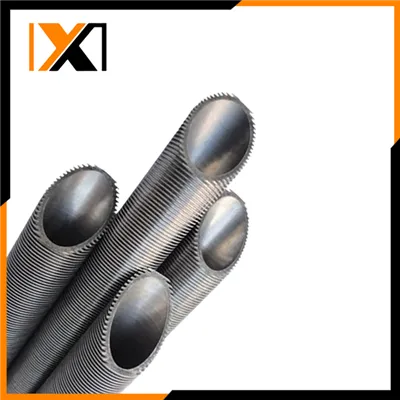
First off, let's get into what copper ordinary low fin tubes are. These tubes are pretty common in the heat - exchange game. They've got those little fins on the outside which help increase the surface area, and that's a big deal for heat transfer. You see, when you increase the surface area, more heat can be transferred between the fluid inside the tube and the surrounding environment.
Now, when it comes to aging, things start to get a bit tricky. Over time, these tubes go through a lot. They're exposed to different fluids, temperatures, and pressures. And all these factors can have an impact on their heat transfer performance.
One of the main things that happens as these tubes age is fouling. Fouling is basically the build - up of stuff on the surface of the tube. It could be dirt, scale, or even some kind of biological growth. When this happens, it creates an extra layer between the fluid and the tube wall. This layer acts as an insulator, reducing the efficiency of heat transfer. You can think of it like wearing an extra thick coat on a hot day. That coat is gonna make it harder for your body heat to escape, right? Well, it's the same idea with these tubes. The fouling layer makes it harder for heat to transfer from the fluid inside the tube to the outside.
Another factor is corrosion. Copper is a relatively stable metal, but over time, it can still corrode, especially if it's exposed to certain chemicals or high - humidity environments. Corrosion can cause pitting on the surface of the tube. These pits can disrupt the flow of fluid inside the tube and also reduce the effective surface area for heat transfer. When the surface area is reduced, the heat transfer rate goes down.
Material degradation is also a biggie. As the tube ages, the copper itself can start to change at a molecular level. The repeated heating and cooling cycles can cause the grains in the copper to grow and change shape. This can lead to a decrease in the thermal conductivity of the copper. Thermal conductivity is a measure of how well a material can conduct heat. When the thermal conductivity of the copper goes down, the tube becomes less efficient at transferring heat.
Let's talk about how we can measure these changes in heat transfer performance. There are a few ways to do this. One common method is to measure the overall heat transfer coefficient. This coefficient takes into account all the factors that affect heat transfer, like the thermal conductivity of the tube material, the surface area, and the heat transfer resistance. By measuring this coefficient at different points in the tube's life, we can see how the heat transfer performance is changing.
We can also look at the temperature difference across the tube. If the temperature difference between the fluid inside the tube and the outside environment is getting smaller over time, it's a sign that the heat transfer performance is decreasing.
Now, you might be wondering, what can we do about it? Well, there are a few strategies. Regular cleaning is one of the most effective ways to combat fouling. By cleaning the tubes periodically, we can remove that fouling layer and restore the heat transfer efficiency. There are different cleaning methods, like chemical cleaning or mechanical cleaning. Chemical cleaning involves using special chemicals to dissolve the fouling, while mechanical cleaning could involve using brushes or high - pressure water jets.
For corrosion, we can use protective coatings. These coatings can act as a barrier between the copper and the corrosive environment. There are different types of coatings available, and the choice depends on the specific application and the type of corrosion the tube is likely to face.
When it comes to material degradation, there's not much we can do to reverse it completely. But we can try to slow it down by controlling the operating conditions. For example, keeping the temperature and pressure within a certain range can help reduce the stress on the tube and slow down the material degradation process.
If you're in the market for high - quality copper tubes, we've got some great options. Check out our Copper Pool Boiling Evaporator Tube, Copper High Performance Condensing Tube, and Copper Hemp Tube. These tubes are designed to have excellent heat transfer performance right from the start and are built to last.
If you're interested in learning more about our copper ordinary low fin tubes or have any questions about heat transfer performance, don't hesitate to reach out. We're always here to help and have a good chat about how we can meet your specific needs. Whether you're in the HVAC industry, the power generation sector, or any other field that requires efficient heat transfer, we've got the tubes for you. So, let's start a conversation and see how we can work together to get the best performance out of your heat - exchange systems.


References
- Incropera, F. P., & DeWitt, D. P. (2002). Fundamentals of Heat and Mass Transfer. John Wiley & Sons.
- Treybal, R. E. (1980). Mass - Transfer Operations. McGraw - Hill.
- Green, D. W., & Perry, R. H. (2007). Perry's Chemical Engineers' Handbook. McGraw - Hill.