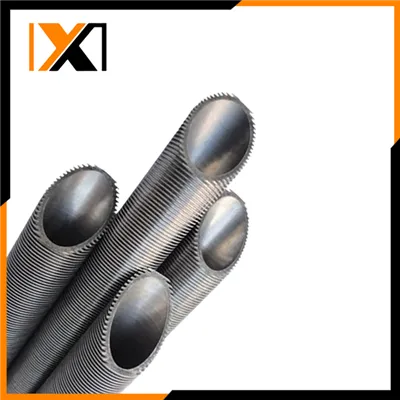
As a supplier of titanium tubes, I've often been asked about the origin of the titanium used in our products. Titanium is a remarkable metal, known for its high strength, low density, and excellent corrosion resistance. These properties make it ideal for a wide range of applications, from aerospace and automotive industries to medical and marine fields. In this blog post, I'll delve into the fascinating journey of titanium, from its discovery to the production of the tubes we supply.
Discovery and Early History
Titanium was first discovered in 1791 by the British clergyman and amateur geologist William Gregor. While examining a black sand in a stream near the village of Mannacan in Cornwall, England, Gregor found an unknown metallic oxide. He named the new element "menachanite" after the parish where he made the discovery. Four years later, in 1795, the German chemist Martin Heinrich Klaproth independently discovered the same element in rutile, a mineral found in Bohemia (now part of the Czech Republic). Klaproth named the element "titanium," after the Titans of Greek mythology, symbolizing its strength.
However, it wasn't until 1910 that pure titanium metal was first produced. The American chemist Matthew A. Hunter developed a process to reduce titanium tetrachloride with sodium metal, yielding 99.9% pure titanium. This process, known as the Hunter process, was the first commercially viable method for producing titanium metal.
Ore Sources
Titanium is the ninth most abundant element in the Earth's crust, but it is rarely found in its pure form. Instead, it is usually found in minerals such as ilmenite (FeTiO₃) and rutile (TiO₂). Ilmenite is the most common titanium ore, accounting for about 90% of the world's titanium production. It is widely distributed and can be found in many countries, including Australia, South Africa, Canada, and the United States.
Rutile, on the other hand, is a more concentrated source of titanium dioxide (TiO₂) and is often used in the production of high - quality titanium pigments. It is less abundant than ilmenite but has a higher titanium content. Major rutile producers include Australia, Sierra Leone, and Ukraine.
Extraction and Refining
The extraction of titanium from its ores is a complex and energy - intensive process. The most common method for producing titanium metal is the Kroll process, which was developed in 1940 by the Luxembourgish metallurgist William J. Kroll.
The first step in the Kroll process is the chlorination of the titanium ore. Ilmenite or rutile is reacted with chlorine gas at high temperatures in the presence of a reducing agent, such as coke. This reaction produces titanium tetrachloride (TiCl₄), which is a volatile liquid at room temperature.
The titanium tetrachloride is then purified by distillation to remove impurities such as iron chloride and other metal chlorides. The purified TiCl₄ is then reduced with magnesium metal in a sealed reactor at high temperatures. This reaction produces titanium sponge and magnesium chloride.
The titanium sponge is a porous, brittle material that contains about 99% titanium. It is then melted in an electric arc furnace under an inert gas atmosphere, usually argon, to remove any remaining impurities and to form a solid titanium ingot.
Production of Titanium Tubes
Once the titanium ingot is produced, it can be further processed into tubes. The first step in tube production is the hot - working process. The titanium ingot is heated to a high temperature and then forged or rolled into a billet. The billet is then pierced to form a hollow tube shell.


After the hot - working process, the tube may undergo cold - working operations, such as cold rolling or cold drawing, to improve its dimensional accuracy and surface finish. Cold - working also increases the strength and hardness of the tube.
The final step in tube production is heat treatment. The tube is heated to a specific temperature and then cooled at a controlled rate to relieve internal stresses, improve its mechanical properties, and enhance its corrosion resistance.
Our Titanium Tube Products
At our company, we offer a wide range of titanium tubes to meet the diverse needs of our customers. Our Titanium Pipe Seamless Tube With Titanium Tube Price is known for its excellent mechanical properties and high corrosion resistance. It is suitable for applications in the chemical, petrochemical, and aerospace industries.
Our Titanium High Performance Condensing Tube is designed for use in heat exchangers and condensers. It has a high thermal conductivity and can withstand high pressures and temperatures, making it ideal for energy - efficient applications.
We also offer Sommth Titanium Tube, which has a smooth surface finish and is suitable for applications where a high - quality surface is required, such as in the medical and food industries.
Conclusion
The origin of the titanium used in our tubes is a long and complex journey, starting from the discovery of the element in the 18th century to the modern - day production processes. Understanding the origin and production of titanium helps us appreciate the unique properties of this remarkable metal and the high - quality tubes we can produce.
If you are interested in our titanium tubes or have any questions about our products, we invite you to contact us for a procurement discussion. We are committed to providing our customers with the best - quality titanium tubes and excellent customer service.
References
- "Titanium: A Technical Guide" by John R. Davis
- "The Chemistry of Titanium" by David A. Palmer
- "Metallurgy of Titanium" by George E. Totten