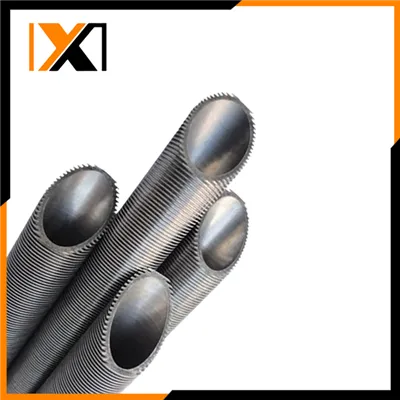
Hey there! As a supplier of copper nickel corrugated tubes, I often get asked about how to test the stress - corrosion cracking resistance of these tubes. Stress - corrosion cracking (SCC) is a big deal in the industry because it can lead to premature failure of the tubes, which is definitely not what we want. So, let's dive into how we can test the SCC resistance of copper nickel corrugated tubes.
Why Testing for SCC Resistance Matters
Before we get into the testing methods, let's quickly talk about why it's so important to test for stress - corrosion cracking resistance. Copper nickel corrugated tubes are used in a variety of applications, like heat exchangers, condensers, and evaporators. In these environments, they're often exposed to corrosive substances and mechanical stress. SCC can occur when a combination of tensile stress and a corrosive environment exists. If the tubes aren't resistant to SCC, they can develop cracks, which can lead to leaks and system failures. That's bad news for our customers, as it can result in costly repairs and downtime.
Testing Methods
Immersion Testing
One of the most common ways to test the SCC resistance of copper nickel corrugated tubes is through immersion testing. In this method, we take samples of the tubes and immerse them in a corrosive solution. The solution is usually chosen to simulate the actual environment where the tubes will be used. For example, if the tubes will be used in a marine environment, we might use a saltwater solution.
We then apply a constant tensile stress to the samples while they're immersed in the solution. This stress can be applied using a variety of methods, such as a dead - weight loading system. The samples are left in the solution for a specific period of time, which can range from a few days to several weeks, depending on the test requirements.
After the immersion period, we remove the samples from the solution and examine them for cracks. We can use techniques like visual inspection, microscopy, or ultrasonic testing to detect the cracks. If no cracks are found, it means the tubes have good SCC resistance under the test conditions. However, if cracks are present, it indicates that the tubes may be susceptible to SCC in real - world applications.
Slow Strain Rate Testing (SSRT)
Another popular testing method is slow strain rate testing. In SSRT, we apply a slow and constant strain rate to the tube samples while they're in a corrosive environment. The strain rate is typically very low, on the order of 10⁻⁶ to 10⁻⁵ per second.
We use a special testing machine to apply the strain to the samples. The machine records the load and the strain as the test progresses. By analyzing the data, we can determine if the tubes are experiencing SCC. If the tubes are resistant to SCC, the load - strain curve will follow a normal pattern. However, if SCC is occurring, we'll see a deviation from the normal curve, which indicates the presence of cracks.
SSRT has some advantages over immersion testing. It can provide more information about the SCC behavior of the tubes, such as the initiation and propagation of cracks. It also allows us to study the effect of different strain rates on SCC.
Electrochemical Testing
Electrochemical testing is another useful method for testing the SCC resistance of copper nickel corrugated tubes. In this method, we measure the electrochemical properties of the tubes in a corrosive environment. We use electrodes to apply a small electrical potential to the tube samples and measure the resulting current.
By analyzing the electrochemical data, we can determine the corrosion rate of the tubes and their susceptibility to SCC. For example, if the corrosion rate is high, it may indicate that the tubes are more likely to experience SCC. We can also use electrochemical impedance spectroscopy (EIS) to study the surface properties of the tubes and detect any changes that may be related to SCC.
Factors Affecting SCC Resistance
There are several factors that can affect the SCC resistance of copper nickel corrugated tubes.
Alloy Composition
The composition of the copper nickel alloy plays a crucial role in SCC resistance. Different alloy compositions have different levels of resistance to corrosion and stress - corrosion cracking. For example, copper nickel alloys with a higher nickel content generally have better SCC resistance. That's because nickel can form a protective oxide layer on the surface of the tubes, which can prevent corrosion and crack initiation.
Heat Treatment
Heat treatment can also affect the SCC resistance of the tubes. Proper heat treatment can improve the microstructure of the alloy, which can enhance its resistance to SCC. For example, annealing can relieve internal stresses in the tubes, which can reduce the likelihood of SCC. On the other hand, improper heat treatment can lead to the formation of brittle phases in the alloy, which can increase the susceptibility to SCC.
Surface Finish
The surface finish of the tubes can also impact SCC resistance. A smooth surface finish can reduce the stress concentration points on the tubes, which can make them less prone to crack initiation. We can use techniques like polishing or grinding to improve the surface finish of the tubes.
Our Products and Their SCC Resistance
As a supplier, we offer a range of copper nickel corrugated tubes with excellent SCC resistance. Our Copper Nickel High Performance Condensing Tube is designed for use in condenser applications. It's made from a high - quality copper nickel alloy and undergoes strict quality control measures to ensure its SCC resistance.


Our Copper Nickel High Performance Evaporating Tube is suitable for evaporator applications. It has been tested using the methods I mentioned earlier and has shown good resistance to SCC in various corrosive environments.
We also offer Copper Nickel Pitted Surface Tube, which has a unique surface structure that can enhance its heat transfer performance while maintaining good SCC resistance.
Conclusion
Testing the stress - corrosion cracking resistance of copper nickel corrugated tubes is essential to ensure their reliability and performance in various applications. By using methods like immersion testing, slow strain rate testing, and electrochemical testing, we can accurately assess the SCC resistance of our tubes. Factors such as alloy composition, heat treatment, and surface finish also play important roles in SCC resistance.
If you're in the market for copper nickel corrugated tubes and want to learn more about our products and their SCC resistance, don't hesitate to reach out. We're here to help you find the right tubes for your specific needs. Contact us to start a procurement discussion and let's work together to ensure your systems run smoothly and efficiently.
References
- Jones, D. A. (1996). Principles and Prevention of Corrosion. Prentice Hall.
- Fontana, M. G. (1986). Corrosion Engineering. McGraw - Hill.
- Roberge, P. R. (2006). Corrosion Basics: An Introduction. NACE International.