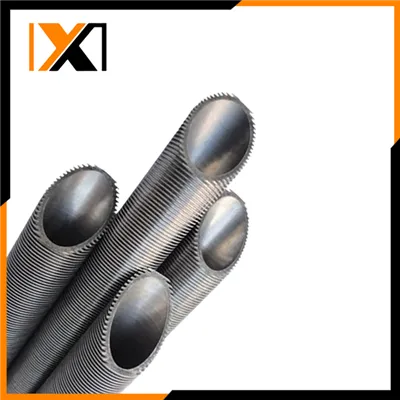
As a supplier of copper ordinary low fin tubes, I've witnessed firsthand the pivotal role that fluid type plays in determining the performance of these tubes. In this blog, I'll delve into the various ways different fluid types can affect the performance of copper ordinary low fin tubes, providing you with valuable insights to make informed decisions for your applications.
Heat Transfer Efficiency
One of the primary performance indicators of copper ordinary low fin tubes is their heat transfer efficiency. Different fluid types have distinct thermal properties, such as thermal conductivity, specific heat capacity, and viscosity, which directly influence the rate of heat transfer.
For instance, fluids with high thermal conductivity, like water, are excellent heat transfer media. When water flows through copper ordinary low fin tubes, it can quickly absorb or release heat due to its ability to conduct thermal energy efficiently. This results in a higher heat transfer coefficient, meaning that more heat can be transferred per unit area and time. As a result, the overall heat transfer performance of the tubes is enhanced, making them ideal for applications where rapid heat exchange is required, such as in Copper Falling Film Evaporator Tube systems.
On the other hand, fluids with low thermal conductivity, such as oils or some organic solvents, pose challenges to heat transfer. These fluids have a slower rate of heat conduction, which can lead to a lower heat transfer coefficient. To compensate for this, larger surface areas or longer tube lengths may be required to achieve the desired heat transfer rate. In such cases, copper ordinary low fin tubes can still be effective, as the fins increase the surface area available for heat transfer, helping to improve the overall performance.
Fluid Flow Characteristics
The flow characteristics of different fluids also have a significant impact on the performance of copper ordinary low fin tubes. Viscosity is a key factor that affects fluid flow. High - viscosity fluids, like heavy oils, flow more slowly and are more likely to experience laminar flow. Laminar flow can result in a less uniform distribution of heat transfer across the tube surface, as the fluid near the tube wall moves more slowly than the fluid in the center. This can lead to a decrease in heat transfer efficiency.
In contrast, low - viscosity fluids, such as water or some refrigerants, tend to have turbulent flow. Turbulent flow promotes better mixing of the fluid, which helps to distribute heat more evenly across the tube surface. As a result, the heat transfer coefficient is increased, and the performance of the copper ordinary low fin tubes is improved.
Another aspect related to fluid flow is the presence of impurities or particles in the fluid. Fluids containing solid particles or contaminants can cause fouling on the tube surface. Fouling acts as an insulating layer, reducing the heat transfer efficiency and increasing the pressure drop across the tubes. For example, in industrial cooling water systems, the presence of minerals, sediment, or biological matter can lead to fouling. Regular maintenance and proper filtration of the fluid are essential to prevent fouling and ensure the long - term performance of the copper ordinary low fin tubes.
Chemical Compatibility
Chemical compatibility between the fluid and the copper material of the tubes is crucial for maintaining the integrity and performance of the tubes. Some fluids may be corrosive to copper, which can lead to tube degradation over time. For example, acidic or alkaline fluids can react with the copper surface, causing corrosion and pitting. This not only reduces the heat transfer efficiency but also weakens the structural integrity of the tubes, increasing the risk of leaks.
When selecting copper ordinary low fin tubes for a particular application, it's essential to consider the chemical properties of the fluid. In cases where the fluid is corrosive, special coatings or alloyed copper tubes may be required to provide protection against corrosion. For example, Copper High Performance Evaporating Tube may be designed with enhanced corrosion - resistant properties to withstand aggressive fluids.
Phase Change Effects
In many applications, fluids undergo phase changes, such as evaporation or condensation, within the copper ordinary low fin tubes. The type of fluid and its phase change characteristics can have a profound impact on the tube performance.
During evaporation, the latent heat of vaporization plays a crucial role. Fluids with a high latent heat of vaporization can absorb a large amount of heat during the phase change process. For example, refrigerants used in air - conditioning and refrigeration systems are selected based on their favorable evaporation properties. When these fluids evaporate inside the copper ordinary low fin tubes, they can efficiently remove heat from the surrounding environment, providing effective cooling.
Condensation is another important phase change process. The surface tension and wetting characteristics of the fluid affect the condensation process. Fluids with low surface tension tend to spread more easily on the tube surface, promoting better heat transfer during condensation. The fins on the copper ordinary low fin tubes can also enhance the condensation process by providing additional nucleation sites for the vapor to condense.
Impact on Pressure Drop
The type of fluid flowing through the copper ordinary low fin tubes can also affect the pressure drop across the tubes. High - viscosity fluids require more energy to flow through the tubes, resulting in a higher pressure drop. This can increase the operating cost of the system, as more power is needed to pump the fluid.
In addition, the presence of fins on the tubes can also contribute to the pressure drop. The fins create additional flow resistance, especially for fluids with complex flow characteristics. However, the increase in heat transfer efficiency due to the fins often outweighs the negative effect of the pressure drop. By carefully selecting the fin geometry and tube dimensions, it's possible to optimize the balance between heat transfer and pressure drop for different fluid types.
Conclusion
In conclusion, the fluid type has a multifaceted impact on the performance of copper ordinary low fin tubes. From heat transfer efficiency and fluid flow characteristics to chemical compatibility, phase change effects, and pressure drop, every aspect of the fluid's properties must be considered when designing and selecting these tubes for specific applications.
As a supplier of copper ordinary low fin tubes, I understand the importance of providing customized solutions based on the unique requirements of each customer. Whether you're dealing with water - based systems, refrigeration applications, or industrial processes involving corrosive fluids, we have the expertise and products to meet your needs. Our Copper Square Tube and other copper tube products are designed to offer optimal performance across a wide range of fluid types.


If you're interested in learning more about how our copper ordinary low fin tubes can work with your specific fluid and application, I encourage you to reach out to us for a detailed discussion. Our team of experts is ready to assist you in making the right choice for your project.
References
- Incropera, F. P., & DeWitt, D. P. (2002). Fundamentals of Heat and Mass Transfer. John Wiley & Sons.
- Holman, J. P. (2002). Heat Transfer. McGraw - Hill.
- Treybal, R. E. (1980). Mass - Transfer Operations. McGraw - Hill.